作者: admin

  • 2026年匿名炒币指南:哪些交易所无需KYC?一文盘点Uniswap、MEXC等隐私交易神器

    2026年匿名炒币指南:哪些交易所无需KYC?一文盘点Uniswap、MEXC等隐私交易神器

    在2026年,随着全球对加密资产监管的收紧,诸如欧盟《加密资产市场条例》(MiCA)和美国《银行保密法》等法规的落地,想要在中心化交易所(CEX)完全匿名地进行交易变得越来越困难。但这并不意味着隐私交易的大门已经关闭。对于注重个人隐私、希望摆脱繁琐身份验证(KYC)的投资者来说,去中心化交易所(DEX)和少数保留宽松政策的中心化平台,依然是保护资产隐私的最佳避风港。

    ⚖️ 2026年无需KYC的两大主流路径

    在盘点具体平台前,我们需要明确目前实现“免KYC”交易的两种核心方式:

    1. 去中心化交易所(DEX): 这是最彻底的匿名方案。DEX通过智能合约运行,用户只需连接Web3钱包(如MetaMask)即可直接进行点对点交易。平台不托管用户资金,无需注册账号,更不需要上传身份证。
    2. 宽松的中心化交易所(CEX): 部分中心化平台为了留住用户,依然提供“有限免KYC”的选项。通常表现为:无需KYC即可进行小额度提现(例如每日1000 USDT以内),或者仅通过邮箱注册即可进行基础交易。
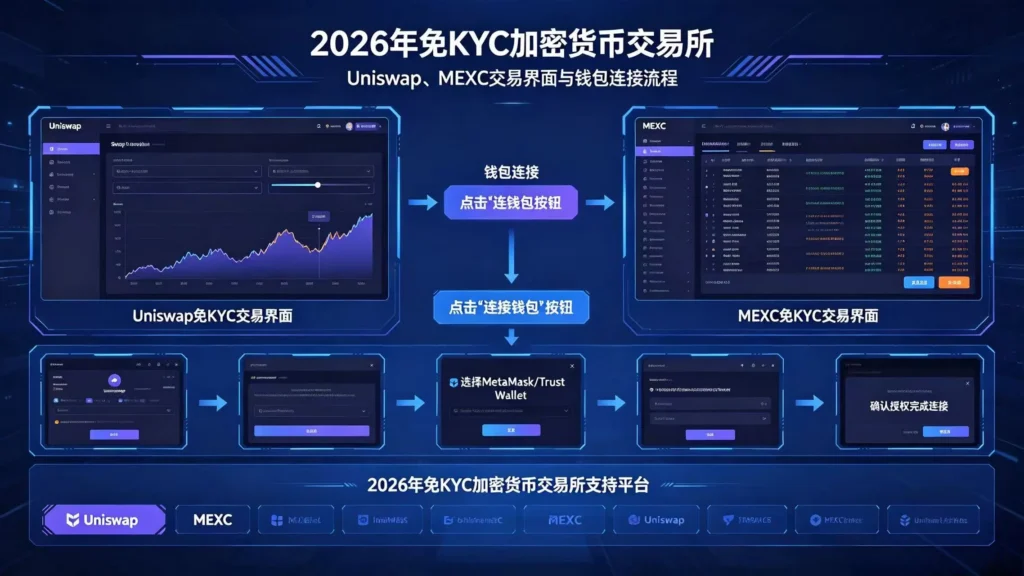
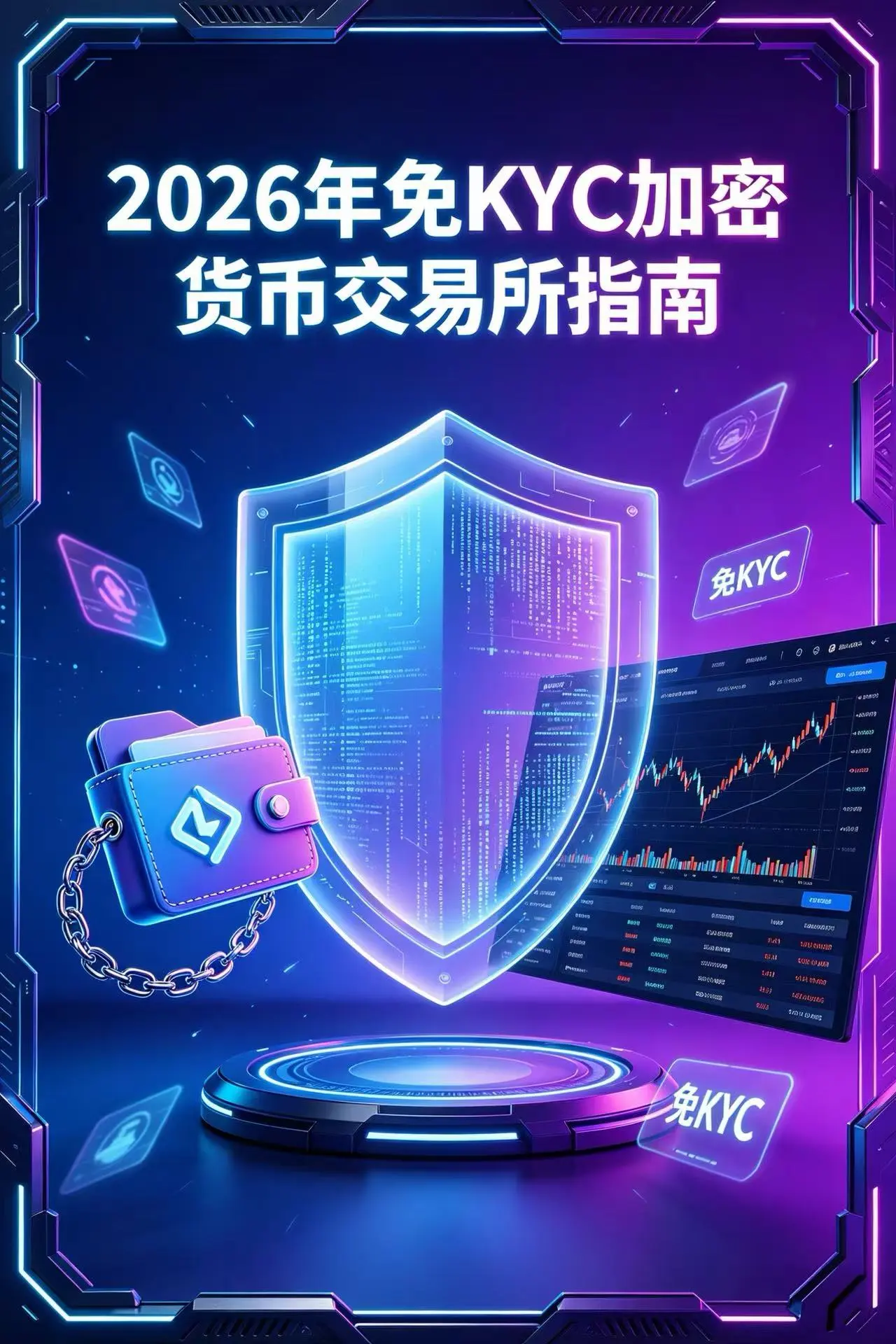
    免 KYC 加密货币交易流程示意图,展示去中心化钱包连接与平台交易界面

    🌐 顶级去中心化交易所(DEX)盘点

    DEX完全由代码和社区治理,是目前最安全、最纯粹的免KYC交易方式。根据2026年的链上交易量和用户活跃度,以下几个DEX是当之无愧的佼佼者:

    1. Uniswap(以太坊及多链霸主):
      作为DEX的绝对龙头,Uniswap在2026年依然占据统治地位。它不仅支持以太坊主网,还覆盖了Base、Arbitrum、Polygon等十几条主流公链。Uniswap V4版本引入了“钩子(hooks)”功能,极大地丰富了流动性策略。对于想要交易主流币种(如ETH、USDT)或蓝筹DeFi代币的用户,Uniswap是深度最好、最安全的首选。
    2. Raydium 与 Jupiter(Solana链双雄):
      如果你偏爱Solana链上极低的Gas费和极快的交易速度,这两个平台不容错过。Jupiter是Solana上最大的流动性聚合器,能为你自动寻找最优兑换价格;而Raydium则是Solana生态的元老级AMM,很多Solana上的新币和Meme币都会选择在这里首发。
    3. PancakeSwap(多链低费率之王):
      诞生于BNB Chain的PancakeSwap,凭借极低的手续费和丰富的玩法(如打新、预测市场)吸引了海量用户。2026年它已扩展到以太坊和Base等网络。对于资金量不大、对Gas费敏感的新手来说,PancakeSwap的操作体验非常友好。
    4. Hyperliquid(链上订单簿衍生品):
      如果你不仅想免KYC买币,还想在链上玩合约,Hyperliquid是目前链上衍生品市场的王者。它采用类似中心化交易所的订单簿模式,交易体验丝滑,且完全无需身份认证,适合追求极致隐私的专业交易员。

    🏦 中心化交易所(CEX)的免KYC选择

    尽管监管趋严,仍有少数中心化交易所为注重隐私的用户留了一扇窗:

    1. MEXC(抹茶):
      在中心化交易所中,MEXC目前的免KYC政策相对最为宽松。未认证账户通常享有较高的每日提现额度(具体额度可能因地区政策动态调整,建议以官网最新公告为准),且现货和合约交易手续费极低。它上线新币的速度极快,是许多“冲土狗”玩家的首选。但需注意,MEXC不支持法币直接交易,出入金需通过链上充提。
    2. CoinEx:
      CoinEx一直以“用户友好”著称,长期以来支持免KYC交易。虽然近年来为了合规也逐步收紧了部分限制,但对于基础的小额交易和链上充提,依然不需要强制进行身份认证,界面简洁,适合新手上手。

    🔒 隐私交易的最后忠告

    选择免KYC交易意味着你将独自承担更多的安全责任。在使用DEX时,务必保护好你的钱包助记词,不要点击不明链接;在使用宽松CEX时,切记“不做大额留存”,交易完成后应及时将资产提现至个人冷钱包。在加密世界,真正的自由永远建立在极致的自我风控之上。


    免责声明
    本文仅供信息参考,不构成任何投资建议。加密货币交易风险极高,请严格遵守所在地区(特别是中国大陆地区)法律法规,切勿参与非法金融活动。本站不对因依赖本文导致的任何资产损失承担责任,请务必做好个人资产安全防护。

  • Rust语言在区块链开发中的内存安全优势与实战指南

    Rust语言在区块链开发中的内存安全优势与实战指南

    引言:为什么区块链开发者需要关注Rust

    在区块链开发领域,安全性与性能始终是两条无法回避的核心主线。2024年链上安全事件造成的资产损失突破15亿美元,其中内存安全问题占比超过三成。从著名的The DAO攻击到近期的多个DeFi协议漏洞,大多数灾难性故障的根源都可以追溯到内存管理不当——缓冲区溢出、空指针解引用、使用后释放等问题反复上演。

    Rust语言正是为解决这类顽疾而生。它通过编译期的所有权系统和借用检查器,在不引入垃圾回收开销的前提下,实现了内存安全与零成本抽象的兼得。这解释了为什么Solana、Polkadot、Near、Aptos等主流区块链项目不约而同选择Rust作为核心开发语言——它们需要一种能够在保持高性能的同时,将安全漏洞扼杀在编译阶段的技术方案。

    Rust内存安全实战:工程师双屏编写智能合约与运行cargo测试

    本文将系统阐述Rust的内存安全机制,解析其在区块链开发中的典型应用场景,并通过可运行的代码示例帮助你建立直觉认知。无论你目前使用Solidity、Go还是其他语言,都能从中获得关于Rust设计哲学的深层理解,为未来的多语言开发能力打下基础。

    一、Rust内存安全机制的核心原理

    1.1 所有权系统:每块数据只有一个主人

    Rust的内存管理革命性在于,它将内存管理的责任从运行时转移到了编译时。编译器通过一套严格的所有权规则,在程序运行前就排除了大多数内存安全问题。

    Rust的所有权规则可以归纳为三条核心原则:每个值有且只有一个所有者;当所有者离开作用域时,该值将被自动释放;值的所有权可以转移(move)或借用(borrow),但不能同时被多个变量持有。

    让我们通过一个具体的区块链场景来理解这套机制。假设在开发一个链上配置管理模块时,需要将配置结构体在多个模块间传递:

    rust

    // 定义一个链上配置结构体
    struct ChainConfig {
        chain_id: u64,
        min_gas_price: u256,
        max_block_gas: u64,
    }
    
    fn main() {
        // 创建配置实例,所有权归属于 config 变量
        let config = ChainConfig {
            chain_id: 1,
            min_gas_price: U256::from(10_000_000_000u64), // 10 Gwei
            max_block_gas: 30_000_000,
        };
        
        // 所有权转移到 validate_config 函数
        // 此后 config 变量不再有效
        let is_valid = validate_config(config);
        
        // 编译错误:config 的所有权已转移
        // println!("{:?}", config); // ❌ 编译失败
        
        println!("配置验证结果: {}", is_valid);
    }
    
    fn validate_config(config: ChainConfig) -> bool {
        // 在函数内部使用配置
        config.max_block_gas > 0 && config.min_gas_price > U256::zero()
    }
    

    这段代码在编译阶段就能发现问题:如果你试图在所有权转移后继续使用config变量,编译器会直接报错,而非等到运行时才崩溃。这种「fail-fast」的编译策略,正是Rust安全性的第一道防线。

    1.2 借用检查器:安全访问的守门人

    在所有权系统的基础上,Rust引入了借用机制,允许在特定条件下临时访问某个值,而不获得其所有权。借用检查器(Borrow Checker)是Rust编译器的一部分,负责确保所有借用操作都遵循以下规则:可以同时存在多个不可变引用(&T),或者只能存在一个可变引用(&mut T),但不能两者同时存在;引用必须始终有效,不能出现悬空引用。

    考虑一个区块链交易处理器的常见场景:需要在验证交易后读取其数据:

    rust

    struct Transaction {
        from: Address,
        to: Address,
        value: U256,
        data: Vec<u8>,
        nonce: u64,
    }
    
    impl Transaction {
        // 借用 &self:只读访问,允许同时有多个读取者
        fn verify_signature(&self) -> bool {
            // 这里只能读取数据,不能修改
            !self.from.is_zero()
        }
        
        fn get_recipient(&self) -> Address {
            self.to
        }
        
        // 可变借用 &mut self:需要独占访问
        fn apply_nonce(&mut self) {
            self.nonce += 1;
        }
    }
    
    fn process_transaction(tx: &mut Transaction) {
        // 不可变借用:同时进行多项只读检查
        let sig_valid = tx.verify_signature();
        let recipient = tx.get_recipient();
        
        if sig_valid && !recipient.is_zero() {
            // 可变借用:需要修改状态
            tx.apply_nonce();
        }
    }
    

    借用检查器的智能之处在于,它允许编译器在编译期进行复杂的生命周期分析,而无需运行时开销。在区块链这种对性能极度敏感的场景中,这种设计完美契合了「既要安全又要高效」的需求。

    1.3 生命周期:悬空引用的终结者

    生命周期(Lifetimes)是Rust最独特也最难掌握的概念之一。它本质上是一种编译期的约束机制,确保引用的有效性与它所依赖的值的存在时间保持一致。换句话说,Rust不允许出现「值已被释放但引用仍然存在」的情况。

    rust

    // 生命周期注释:返回值的生命周期与输入参数相关
    fn find_validator<'a>(validators: &'a [Address], index: usize) -> &'a Address {
        &validators[index]
    }
    
    fn main() {
        let chain_validators = vec![
            Address::fromhex("0x1234..."),
            Address::fromhex("0x5678..."),
            Address::fromhex("0x9abc..."),
        ];
        
        // 安全的引用:引用的生命周期不超过 vector 的生命周期
        let first_validator = find_validator(&chain_validators, 0);
        println!("第一个验证者: {:?}", first_validator);
        
        // 编译器确保 first_validator 不会在 chain_validators 之后使用
        // 悬空引用被彻底杜绝
    }
    

    对于区块链开发者而言,理解生命周期尤为重要。在链上状态管理、跨模块数据传递等场景中,生命周期注释帮助开发者明确数据的有效期边界,避免出现use-after-free等危险错误。

    二、Rust在区块链开发中的典型应用场景

    2.1 智能合约开发:替代Solidity的新选择

    随着以Rust为内核的区块链生态蓬勃发展,越来越多的项目开始支持Rust编写智能合约。Aptos的Move语言、Solana的程序内置Rust SDK、以及Polkadot的ink!框架,都将Rust作为一等公民。

    以ink!框架为例,它可以让你用Rust编写可部署到Polkadot/Web3合约平台的智能合约:

    rust

    use ink_lang as ink;
    
    #[ink::contract]
    mod token {
        #[ink(storage)]
        pub struct Token {
            total_supply: Balance,
            balances: ink_storage::collections::HashMap<AccountId, Balance>,
        }
    
        impl Token {
            #[ink(constructor)]
            pub fn new(initial_supply: Balance) -> Self {
                let mut balances = HashMap::new();
                let caller = Self::env().caller();
                balances.insert(caller, initial_supply);
                
                Self { total_supply: initial_supply, balances }
            }
    
            #[ink(message)]
            pub fn balance_of(&self, owner: AccountId) -> Balance {
                self.balances.get(&owner).copied().unwrap_or(0)
            }
    
            #[ink(message)]
            pub fn transfer(&mut self, to: AccountId, value: Balance) -> bool {
                let from = Self::env().caller();
                let from_balance = self.balance_of(from);
                
                if from_balance < value {
                    return false;
                }
                
                self.balances.insert(from, from_balance - value);
                let to_balance = self.balance_of(to);
                self.balances.insert(to, to_balance + value);
                
                true
            }
        }
    }
    

    这段代码展示了Rust智能合约的基本结构:#[ink(storage)]定义持久化存储,#[ink(constructor)]是构造函数,#[ink(message)]标记可被外部调用的方法。通过编译,这些Rust代码最终被转化为Wasm字节码部署到链上。

    2.2 共识算法实现:性能与安全的完美平衡

    Rust在高性能要求的区块链底层组件中同样大放异彩。共识算法是区块链系统最核心也最复杂的部分,需要在极致的性能与绝对的安全性之间取得平衡。

    以下是一个简化的PBFT(实用拜占庭容错)共识消息处理示例,展示Rust如何优雅地处理复杂的并发逻辑:

    rust

    use std::collections::HashMap;
    use std::time::{Duration, Instant};
    
    #[derive(Debug, Clone)]
    struct PBFTMessage {
        view_number: u64,
        sequence_number: u64,
        sender: NodeId,
        msg_type: MessageType,
        digest: [u8; 32],
        signature: Vec<u8>,
    }
    
    #[derive(Debug, Clone)]
    enum MessageType {
        PrePrepare,
        Prepare,
        Commit,
    }
    
    struct PBFTNode {
        node_id: NodeId,
        view: u64,
        sequence: u64,
        current_phase: ConsensusPhase,
        prepared_messages: HashMap<(u64, u64), Vec<PBFTMessage>>,
        committed_messages: HashMap<(u64, u64), Vec<PBFTMessage>>,
        faults_tolerance: usize,
    }
    
    #[derive(PartialEq)]
    enum ConsensusPhase {
        Idle,
        PrePrepared,
        Prepared,
        Committed,
    }
    
    impl PBFTNode {
        fn new(node_id: NodeId, total_nodes: usize) -> Self {
            // BFT系统容忍 f = (n-1)/3 个故障节点
            let faults_tolerance = (total_nodes - 1) / 3;
            
            Self {
                node_id,
                view: 0,
                sequence: 0,
                current_phase: ConsensusPhase::Idle,
                prepared_messages: HashMap::new(),
                committed_messages: HashMap::new(),
                faults_tolerance,
            }
        }
        
        fn handle_preprepare(&mut self, msg: PBFTMessage) -> Result<Vec<PBFTMessage>, ConsensusError> {
            // 验证消息有效性
            if msg.view_number != self.view {
                return Err(ConsensusError::ViewMismatch);
            }
            
            if msg.msg_type != MessageType::PrePrepare {
                return Err(ConsensusError::InvalidMessageType);
            }
            
            self.current_phase = ConsensusPhase::PrePrepared;
            self.sequence = msg.sequence_number;
            
            // 生成对应的 Prepare 消息
            self.generate_prepare_messages(&msg)
        }
        
        fn handle_prepare(&mut self, msg: PBFTMessage) -> Result<bool, ConsensusError> {
            if msg.msg_type != MessageType::Prepare {
                return Err(ConsensusError::InvalidMessageType);
            }
            
            let key = (msg.view_number, msg.sequence_number);
            let prepares = self.prepared_messages.entry(key).or_insert_with(Vec::new);
            prepares.push(msg.clone());
            
            // 检查是否收到足够的 Prepare 消息(>= 2f)
            let sufficient_prepares = prepares.len() >= 2 * self.faults_tolerance;
            
            if sufficient_prepares && self.current_phase == ConsensusPhase::PrePrepared {
                self.current_phase = ConsensusPhase::Prepared;
            }
            
            Ok(sufficient_prepares)
        }
        
        fn generate_prepare_messages(&self, preprepare: &PBFTMessage) -> Result<Vec<PBFTMessage>, ConsensusError> {
            let mut prepares = Vec::new();
            
            prepares.push(PBFTMessage {
                view_number: preprepare.view_number,
                sequence_number: preprepare.sequence_number,
                sender: self.node_id,
                msg_type: MessageType::Prepare,
                digest: preprepare.digest,
                signature: vec![], // 实际签名逻辑省略
            });
            
            Ok(prepares)
        }
    }
    
    #[derive(Debug)]
    enum ConsensusError {
        ViewMismatch,
        InvalidMessageType,
        InsufficientSignatures,
    }
    
    type NodeId = [u8; 32];
    
    fn main() {
        // 模拟4个节点的PBFT网络
        let total_nodes = 4;
        let mut nodes: Vec<PBFTNode> = (0..total_nodes)
            .map(|i| PBFTNode::new([i as u8; 32], total_nodes))
            .collect();
        
        println!("PBFT共识节点初始化完成: {} 个节点, 容忍 {} 个故障节点", 
                 total_nodes, nodes[0].faults_tolerance);
    }
    

    这个示例虽然简化了真实的PBFT实现,但展示了Rust处理区块链共识逻辑的几个关键能力:清晰的错误处理(Result类型)、安全的并发状态管理(通过所有权和借用规则)、以及高性能的数据结构(HashMap、Vec)。

    三、Rust开发工具链与项目实践

    3.1 构建工具与包管理:Cargo的威力

    Cargo是Rust的官方包管理器和构建工具,它统一了依赖管理、编译调度和测试运行等开发全流程。对于区块链项目而言,Cargo的工作区(Workspace)功能特别有价值,可以管理由多个crate组成的大型项目。

    创建一个新的Rust区块链项目只需一条命令:

    bash

    # 初始化新项目
    cargo new my-blockchain-project
    cd my-blockchain-project
    
    # 添加区块链相关依赖
    [dependencies]
    # 密码学库
    sha2 = "0.10"
    ripemd160 = "0.10"
    secp256k1 = { version = "0.28", features = ["recovery"] }
    
    # 序列化和编解码
    serde = { version = "1.0", features = ["derive"] }
    serde_json = "1.0"
    
    # 大数运算(区块链必备)
    ethnum = "1.5"
    
    # 异步运行时
    tokio = { version = "1", features = ["full"] }
    
    # 测试框架
    [dev-dependencies]
    criterion = "0.5"
    

    Cargo的.lock文件确保了构建的可重复性,这对于需要跨团队协作和持续集成的区块链项目至关重要。此外,Cargo的子命令生态非常丰富:cargo test运行单元测试和集成测试,cargo bench进行性能基准测试,cargo doc生成API文档,cargo clippy提供代码风格和潜在问题的lint检查。

    3.2 测试驱动开发:保障合约安全的利器

    Rust内置的测试框架鼓励测试先行(Test-Driven Development)理念。在智能合约开发中,TDD模式尤为适用——合约一旦部署就难以修改,在部署前充分测试是防止漏洞的最后防线。

    rust

    // src/lib.rs
    
    /// 简化版代币转移逻辑演示
    pub struct SimpleToken {
        balances: std::collections::HashMap<[u8; 20], u64>,
    }
    
    impl SimpleToken {
        pub fn new() -> Self {
            Self { balances: std::collections::HashMap::new() }
        }
        
        pub fn transfer(&mut self, from: &[u8; 20], to: &[u8; 20], amount: u64) -> Result<(), TokenError> {
            let from_balance = self.balances.get(from).copied().unwrap_or(0);
            
            // 核心安全检查:余额不足
            if from_balance < amount {
                return Err(TokenError::InsufficientBalance);
            }
            
            // 扣款
            self.balances.insert(*from, from_balance - amount);
            
            // 收款
            let to_balance = self.balances.get(to).copied().unwrap_or(0);
            self.balances.insert(*to, to_balance + amount);
            
            Ok(())
        }
        
        pub fn balance(&self, account: &[u8; 20]) -> u64 {
            self.balances.get(account).copied().unwrap_or(0)
        }
    }
    
    #[derive(Debug, PartialEq)]
    pub enum TokenError {
        InsufficientBalance,
        InvalidAddress,
    }
    
    #[cfg(test)]
    mod tests {
        use super::*;
        
        #[test]
        fn test_successful_transfer() {
            let mut token = SimpleToken::new();
            let alice = [0u8; 20];
            let bob = [1u8; 20];
            
            // 初始化余额
            token.balances.insert(alice, 1000);
            
            // 执行转账
            let result = token.transfer(&alice, &bob, 300);
            assert!(result.is_ok());
            
            assert_eq!(token.balance(&alice), 700);
            assert_eq!(token.balance(&bob), 300);
        }
        
        #[test]
        fn test_insufficient_balance() {
            let mut token = SimpleToken::new();
            let alice = [0u8; 20];
            let bob = [1u8; 20];
            
            token.balances.insert(alice, 100);
            
            // 尝试转出超过余额的金额
            let result = token.transfer(&alice, &bob, 500);
            assert!(matches!(result, Err(TokenError::InsufficientBalance)));
            
            // 余额应保持不变
            assert_eq!(token.balance(&alice), 100);
            assert_eq!(token.balance(&bob), 0);
        }
        
        #[test]
        fn test_zero_transfer() {
            let mut token = SimpleToken::new();
            let alice = [0u8; 20];
            let bob = [1u8; 20];
            
            token.balances.insert(alice, 1000);
            
            // 转账0代币应该成功(实现取决于业务需求)
            let result = token.transfer(&alice, &bob, 0);
            assert!(result.is_ok());
            
            assert_eq!(token.balance(&alice), 1000);
        }
        
        #[test]
        fn test_transfer_to_self() {
            let mut token = SimpleToken::new();
            let alice = [0u8; 20];
            
            token.balances.insert(alice, 500);
            
            // 给自己转账
            let result = token.transfer(&alice, &alice, 100);
            assert!(result.is_ok());
            
            // 余额不变
            assert_eq!(token.balance(&alice), 500);
        }
    }
    

    运行测试只需执行cargo test,Rust的测试框架会编译并执行所有标记为#[test]的函数,输出详细的测试结果。对于区块链合约开发,建议达到80%以上的测试覆盖率,并通过property-based testing(如proptest库)生成大量随机输入,检验边界条件下的行为正确性。

    四、Rust与区块链开发的其他语言对比

    4.1 Rust vs Solidity:语言范式差异

    Solidity是面向以太坊虚拟机的智能合约语言,采用的是高级脚本语言的范式;而Rust是一门系统编程语言,需要开发者理解更底层的概念。以下是核心差异的对比分析:

    维度SolidityRust
    内存管理自动垃圾回收,EVM自动处理所有权系统,编译期管理
    类型系统动态类型为主,编译期检查有限静态强类型,泛型丰富
    错误处理require/assert/revertResult/Option类型
    编译目标EVM字节码本地代码/Wasm
    适用场景以太坊系DApp链底层、高性能合约
    学习曲线相对平缓陡峭但回报丰厚

    选择哪种语言取决于具体需求:如果你的业务完全运行在以太坊生态,Solidity的生态支持更完善;但如果你需要构建跨链协议、高性能链底层组件,或希望在Aptos、Solana等非EVM链上开发,Rust是不可替代的选择。

    4.2 Rust vs Go:并发与性能的权衡

    Go语言在区块链领域同样占据重要地位,Go-Ethereum(Geth)就是用Go编写的。Go以其简洁的语法和出色的并发模型著称,而Rust则在极致性能和内存安全上更胜一筹。

    对于需要高频交易处理、复杂状态转换或密码学密集计算的场景,Rust的性能优势可能成为决定性因素。而对于需要快速迭代、业务逻辑相对简单、以太坊兼容优先的项目,Go的开发效率可能更合适。

    五、学习路径与资源推荐

    5.1 入门路线图

    对于有编程基础的开发者,建议按以下路径学习Rust区块链开发:

    第一阶段(1-2周):掌握Rust基础语法,通过Rust官方书籍《The Rust Programming Language》完成入门学习。重点理解所有权、借用、生命周期三大核心概念。

    第二阶段(2-3周):学习Rust标准库和常用crate,理解错误处理、异步编程、测试框架等工程化实践。开始阅读开源Rust区块链项目的源码。

    第三阶段(持续):选择目标区块链平台的Rust SDK进行深入学习,如Solana的Rust SDK、Polkadot的ink!框架、或Aptos的Move语言。参与开源项目贡献,提升实战能力。

    5.2 优质学习资源

    • 官方文档:《The Rust Programming Language》、Rust By Example、Rust Cookbook
    • 区块链专项:《Programming Rust》区块链章节、Rust in Blockchain社区项目文档
    • 实践平台:Rustlings交互式练习、Exercism Rust Track
    • 社区项目:Solana Program Library、Polkadot ink!示例仓库、Movement Labs Move语言

    结语

    Rust语言为区块链开发提供了一种独特的价值主张:它让你在享受接近C/C++的性能的同时,获得内存安全的强保证。对于追求系统可靠性、不愿意在安全性和性能之间妥协的区块链项目而言,Rust正在成为越来越难以忽视的选择。

    尽管Rust的学习曲线确实陡峭,但一旦跨越这道门槛,你获得的是一种对代码行为的深层确定性直觉——你写下的每一行代码,编译器都会帮你验证其安全性。这种「编译期即测试期」的理念,正是区块链开发最需要的安全保障。

    无论你是希望拓展技术栈的以太坊开发者,还是正在寻找第一门区块链语言的初学者,现在都是开始学习Rust的好时机。整个生态系统正在快速发展,工作机会和项目需求都在持续增长。掌握Rust,意味着你在区块链行业拥有了面向未来的核心竞争力。

  • ERC-4337账户抽象全面普及:Web3用户入门门槛大幅降低

    ERC-4337账户抽象全面普及:Web3用户入门门槛大幅降低

    为什么传统账户让人头疼

    以太坊有两种账户类型:外部拥有账户(EOA)和合约账户(CA)。

    EOA由私钥控制,必须自己支付Gas,不能有条件地执行操作,无法实现多重签名等复杂逻辑,丢失私钥就丢失一切。

    ERC-4337:把钱包变成智能合约

    ERC-4337的核心思想是:用智能合约替代EOA作为默认账户。

    在ERC-4337中,用户的”钱包”实际上是一个智能合约,叫作”账户合约”。这个合约定义了账户的逻辑:谁可以控制它、如何验证交易、如何执行操作。

    智能合约钱包:开发者IDE中ERC-4337合约代码与Paymaster实现

    关键组件包括:

    账户合约:用户的钱包本体,定义账户逻辑。可以实现多签、社交恢复、权限管理等高级功能。

    入口点合约:处理UserOp的标准化接口,确保不同账户实现之间的互操作性。

    Paymaster合约:允许第三方代付Gas费,或者用ERC-20代币支付Gas。这是实现”无Gas交易”的关键。

    无Gas交易:用户再也不需要懂Gas

    ERC-4337最吸引普通用户的功能是”无Gas交易”。

    开发者可以部署自己的Paymaster合约,替用户支付Gas费。常见的应用场景包括:应用内补贴(DeFi协议替用户支付Gas费作为获客手段)、Gas费代币化(用户可以直接用USDT等ERC-20代币支付Gas)。

    社交恢复:告别”一私钥走天下”

    ERC-4337的账户合约可以实现”社交恢复”功能:

    用户可以设定多个”监护人”。如果主私钥丢失,用户可以通过监护人的签名来重置账户密钥。整个过程在链上透明可验证,不需要中心化服务。

    可编程权限:企业级资产管理

    ERC-4337支持复杂的权限管理。

    比如,一个公司可以设置这样的账户规则:CEO可以审批任意交易,财务主管可以审批低于10 ETH的交易,超过10 ETH需要双重签名,超过100 ETH需要董事会决议。

    AI Agent与账户抽象:机器经济的基础

    AI Agent需要在链上自主执行操作,但传统的EOA模式对机器不友好。通过ERC-4337,AI Agent的钱包是一个智能合约:可由Paymaster代付Gas、可实现多重签名保护、可设置操作权限边界。

    这正是HashKey Group在白皮书中提到的”双Token”架构的技术基础。

    开发者建议

    对于DApp开发者:

    第一,拥抱账户抽象。提供Gas费代付可以显著提升转化率。

    第二,分层Gas策略。设计灵活的Gas方案:普通交易用用户Gas,高价值操作用协议补贴Gas。

    第三,账户抽象不只是”钱包升级”。它改变了用户与合约交互的方式。重新思考DApp的交互流程。

    第四,关注安全。智能合约钱包比EOA更复杂,可能有更多攻击面。确保账户合约经过充分审计。

    账户抽象的时代已经到来。抓住这个机会,你的产品将赢得下一代Web3用户。

  • Vitalik香港对话揭示智能合约开发新趋势:形式化验证与AI结合成关键

    Vitalik香港对话揭示智能合约开发新趋势:形式化验证与AI结合成关键

    形式化验证:从”找到漏洞”到”证明无漏洞”

    Vitalik在对话中提到,形式化验证是让智能合约真正安全的唯一途径。

    传统审计是”找漏洞”——通过人工审查和工具扫描,发现已知的漏洞模式。但这种方法有天然局限:它无法穷尽所有可能的执行路径,无法发现未知类型的攻击。

    形式化验证则是”证明无漏洞”——通过数学方法,对合约的所有可能状态进行穷举分析,从数学上证明合约的正确性。如果一个合约通过了形式化验证,那它就是数学意义上安全的。

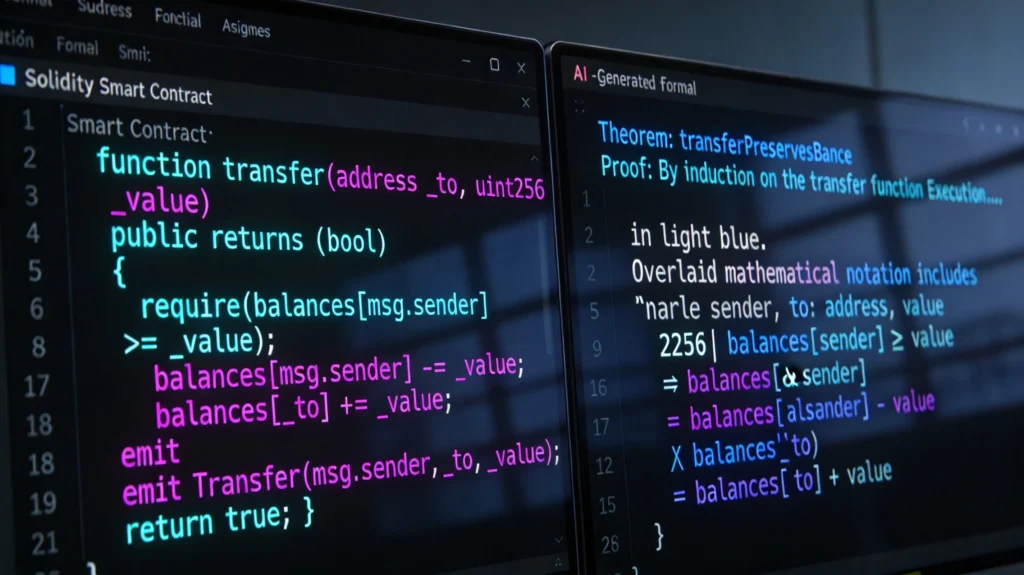
    AI智能合约:开发者IDE中Solidity代码与AI形式化验证证明并排呈现

    AI赋能:让形式化验证走向大众

    Vitalik的核心观点是:AI正在成为形式化验证的催化剂。

    Claude Mythos等新一代AI模型的能力让很多人”惊讶甚至害怕”,但Vitalik认为这只是开始。”我们需要看趋势——明年、后年的AI会更好,2029年的AI找漏洞的能力可能会非常可怕。”

    这种趋势意味着:未来,一个没有编程能力的个人,可以用自然语言描述商业逻辑,AI会自动将这个描述转化为经过形式化验证的智能合约代码。

    Vyper与Solidity:两种语言的演化路径

    对话中特别提到了Vyper和Solidity两种智能合约语言的发展方向。

    Vyper从设计之初就将安全性放在首位,支持形式化验证。Solidity则更注重灵活性和生态系统支持。两种语言代表了两种不同的哲学:Vyper追求极致安全,Solidity追求生态繁荣。

    AI钱包:钱包概念的消亡

    Vitalik提到,去年以太坊基金会成立了Kohaku团队,正在开发AI钱包。但团队认为未来的”钱包”概念可能会消失,取而代之的是AI钱包。

    用户可以用自然语言描述需求,AI会自动完成操作。它不需要用户理解底层的加密概念,只需要信任AI的执行能力。

    以太坊L1的下一版本:更快、更安全

    Vitalik透露了以太坊PoS共识下一版本的目标。

    第一,更快。当前的最终确认时间约16分钟,下一版本的目标是缩短到16秒甚至更少。

    第二,抗量子。下一版本将采用形式化验证方法证明共识协议的安全性,包括抗量子签名和抗量子零知识证明技术栈。

    对开发者的启示

    Vitalik的观点给智能合约开发者几点启示:

    第一,安全审计不够用了。开发者需要拥抱形式化验证和AI辅助安全工具。

    第二,语言选择有讲究。对于需要高安全性的合约,可以考虑Vyper。

    第三,AI开发工具是大势所趋。早点熟悉这些工具,就能在竞争中占据优势。

    智能合约开发的未来,属于那些拥抱新技术、重视安全、关注长期价值的人。

  • 智能合约访问控制完全指南:从Ownable到RBAC权限体系设计

    智能合约访问控制完全指南:从Ownable到RBAC权限体系设计

    访问控制在智能合约中的重要性

    区块链的本质是开放账本,部署到链上的合约代码对所有人都可见,任何人都可以调用公共函数。这种开放性带来了信任问题:谁有权限修改合约状态?谁可以执行管理员操作?如何防止未授权的访问?

    访问控制是智能合约安全的基石。2022年的Ronin Bridge攻击、Beanstalk Farms漏洞利用,这些重大安全事件都与访问控制缺陷直接或间接相关。一次权限管理的疏忽可能导致数亿美元的损失。对于任何认真对待安全的开发者来说,深入理解访问控制机制都不是可选项,而是必修课。

    本文将从最基础的Ownable模式讲起,逐步深入到基于角色的访问控制(RBAC)、时间锁保护、多签钱包等进阶主题,帮助你构建从简单到复杂的完整权限管理知识体系。

    权限管理实战:Solidity角色继承树与安全审计看板

    Ownable模式:起点与局限

    Ownable是最简单也最常用的访问控制模式。其核心理念是:合约有一个明确的所有者(Owner),只有所有者可以执行某些特权操作。

    OpenZeppelin的Ownable实现

    现代的Ownable实现通常采用修饰器(Modifier)模式:

    solidity

    // SPDX-License-Identifier: MIT
    pragma solidity ^0.8.24;
    
    import "@openzeppelin/contracts/access/Ownable.sol";
    
    contract MyContract is Ownable {
        uint256 public value;
        
        // 只有所有者可以调用
        function setValue(uint256 _value) external onlyOwner {
            value = _value;
        }
        
        // 普通函数,任何人都可以调用
        function getValue() external view returns (uint256) {
            return value;
        }
    }
    

    onlyOwner修饰器在函数执行前检查msg.sender是否为当前所有者。如果不是,交易会回滚并抛出OwnableUnauthorizedAccount错误。

    Ownable的风险与局限

    Ownable模式简单有效,但存在几个明显的问题:

    单点故障风险:如果所有者的私钥泄露,攻击者立即获得合约的完全控制权。没有备份机制,没有多因素认证,所有鸡蛋都在一个篮子里。

    权限过于粗粒度:要么拥有所有权限,要么什么都没有。现实中需要区分不同级别的管理员,比如”运营人员可以暂停合约”但”只有核心团队才能升级合约”。

    所有权转移的复杂性:转让所有权需要所有者亲手操作,如果所有者丢失私钥,合约就变成了无人能管理的”永久锁定”状态。

    对于生产级应用,你需要更健壮的访问控制方案。

    AccessControl:基于角色的权限管理

    当Ownable的简单性无法满足需求时,AccessControl提供了更灵活的解决方案。它将权限划分为不同的角色,每个角色可以授权给多个地址,每个地址也可以拥有多个角色。

    核心概念

    AccessControl基于三个核心概念:

    角色(Role):用bytes32类型的唯一标识符表示。Solidity中约定使用keccak256哈希来生成角色标识,例如bytes32 public constant ADMIN_ROLE = keccak256("ADMIN_ROLE")

    权限(Permission):每个角色关联一组函数。拥有该角色的地址可以调用这些函数。

    授权(Grant):将角色分配给地址的行为。只有拥有DEFAULT_ADMIN_ROLE的角色才能授权。

    基本使用示例

    solidity

    // SPDX-License-Identifier: MIT
    pragma solidity ^0.8.24;
    
    import "@openzeppelin/contracts/access/AccessControl.sol";
    
    contract RoleBasedContract is AccessControl {
        bytes32 public constant ADMIN_ROLE = keccak256("ADMIN_ROLE");
        bytes32 public constant MINTER_ROLE = keccak256("MINTER_ROLE");
        bytes32 public constant PAUSER_ROLE = keccak256("PAUSER_ROLE");
        
        uint256 private _totalSupply;
        mapping(address => uint256) private _balances;
        bool public paused;
        
        event TokensMinted(address indexed to, uint256 amount);
        event PausedChanged(bool newState);
        
        constructor() {
            // 部署者获得所有角色
            _grantRole(DEFAULT_ADMIN_ROLE, msg.sender);
            _grantRole(ADMIN_ROLE, msg.sender);
            _grantRole(MINTER_ROLE, msg.sender);
            _grantRole(PAUSER_ROLE, msg.sender);
        }
        
        // 代币铸造 - 仅有MINTER_ROLE可调用
        function mint(address to, uint256 amount) external onlyRole(MINTER_ROLE) {
            require(!paused, "Contract is paused");
            _totalSupply += amount;
            _balances[to] += amount;
            emit TokensMinted(to, amount);
        }
        
        // 暂停功能 - 仅有PAUSER_ROLE可调用
        function pause() external onlyRole(PAUSER_ROLE) {
            paused = true;
            emit PausedChanged(true);
        }
        
        function unpause() external onlyRole(PAUSER_ROLE) {
            paused = false;
            emit PausedChanged(false);
        }
        
        // 添加MINTER - 仅有ADMIN_ROLE可调用
        function addMinter(address account) external onlyRole(ADMIN_ROLE) {
            grantRole(MINTER_ROLE, account);
        }
        
        // 移除MINTER - 仅有ADMIN_ROLE可调用
        function removeMinter(address account) external onlyRole(ADMIN_ROLE) {
            revokeRole(MINTER_ROLE, account);
        }
    }
    

    权限层级设计

    合理的权限层级设计应该遵循最小权限原则:每个角色只拥有完成其职责所必需的权限,不多也不少。

    一个典型DeFi合约的权限层级可能如下:

    solidity

    // 权限层级定义
    contract TieredAccess {
        // 第1层:管理员 - 最高权限,可以管理其他角色
        bytes32 public constant ADMIN_ROLE = keccak256("ADMIN_ROLE");
        
        // 第2层:运营 - 可以暂停合约、调整某些参数
        bytes32 public constant OPERATOR_ROLE = keccak256("OPERATOR_ROLE");
        
        // 第3层:白名单 - 可以参与某些受限功能
        bytes32 public constant WHITELIST_ROLE = keccak256("WHITELIST_ROLE");
        
        // 第4层:普通用户 - 默认拥有基础访问
        // 不需要显式角色,基础功能对所有地址开放
        
        // 紧急暂停 - 可以由运营或管理员触发
        function emergencyPause() external onlyRole(OPERATOR_ROLE) {
            _pause();
        }
        
        // 调整费率 - 仅管理员可操作
        function setFeeRate(uint256 newRate) external onlyRole(ADMIN_ROLE) {
            require(newRate <= 1000, "Rate too high"); // 最大10%
            feeRate = newRate;
        }
        
        // 白名单功能 - 白名单用户专享
        function whitelistedFunction() external onlyRole(WHITELIST_ROLE) {
            // 仅限白名单用户的逻辑
        }
    }
    

    分层权限架构设计

    对于复杂的系统,简单的RBAC可能仍然不够。我们需要一个分层架构,让权限管理本身也能被治理。

    两级管理员模式

    solidity

    // SPDX-License-Identifier: MIT
    pragma solidity ^0.8.24;
    
    import "@openzeppelin/contracts/access/AccessControl.sol";
    
    contract HierarchicalAccessControl is AccessControl {
        bytes32 public constant LEVEL1_ADMIN = keccak256("LEVEL1_ADMIN");
        bytes32 public constant LEVEL2_ADMIN = keccak256("LEVEL2_ADMIN");
        bytes32 public constant LEVEL3_ADMIN = keccak256("LEVEL3_ADMIN");
        
        // LEVEL1可以授予LEVEL2和LEVEL3,但不能授予同级
        // LEVEL2可以授予LEVEL3
        // LEVEL3只能执行具体业务逻辑
        
        mapping(bytes32 => bytes32) public roleHierarchy;
        
        constructor() {
            roleHierarchy[LEVEL1_ADMIN] = bytes32(0);
            roleHierarchy[LEVEL2_ADMIN] = LEVEL1_ADMIN;
            roleHierarchy[LEVEL3_ADMIN] = LEVEL2_ADMIN;
            
            _grantRole(LEVEL1_ADMIN, msg.sender);
        }
        
        // 检查调用者是否拥有目标角色或更高级角色
        modifier hasPrivilege(bytes32 requiredRole) {
            require(
                hasRole(requiredRole, msg.sender) || 
                hasHigherPrivilege(requiredRole, msg.sender),
                "Insufficient privilege level"
            );
            _;
        }
        
        function hasHigherPrivilege(bytes32 role, address account) 
            public 
            view 
            returns (bool) 
        {
            bytes32 current = roleHierarchy[role];
            while (current != bytes32(0)) {
                if (hasRole(current, account)) {
                    return true;
                }
                current = roleHierarchy[current];
            }
            return false;
        }
        
        // 安全的角色授予 - 检查层级关系
        function safeGrantRole(bytes32 role, address account) 
            external 
            hasPrivilege(role) 
        {
            grantRole(role, account);
        }
    }
    

    时间锁与治理集成

    即使有了完善的角色体系,仍然存在管理员作恶或被攻击的风险。时间锁通过引入延迟执行的机制,让用户有时间应对恶意操作。

    TimelockController实战

    OpenZeppelin的TimelockController提供了开箱即用的时间锁功能:

    solidity

    // SPDX-License-Identifier: MIT
    pragma solidity ^0.8.24;
    
    import "@openzeppelin/contracts/governance/TimelockController.sol";
    
    contract TimeLockedContract {
        TimelockController public timelock;
        address public proxy;
        
        bytes32 public constant PROPOSER_ROLE = keccak256("PROPOSER_ROLE");
        bytes32 public constant EXECUTOR_ROLE = keccak256("EXECUTOR_ROLE");
        bytes32 public constant ADMIN_ROLE = keccak256("TIMELOCK_ADMIN_ROLE");
        
        uint256 public constant MIN_DELAY = 2 days;
        uint256 public constant MAX_DELAY = 30 days;
        
        constructor(address _timelock, address _proxy) {
            timelock = TimelockController(payable(_timelock));
            proxy = _proxy;
            
            // 授予Timelock相关权限
            timelock.grantRole(PROPOSER_ROLE, address(this));
            timelock.grantRole(EXECUTOR_ROLE, address(0)); // 任何人都可以执行
        }
        
        // 通过时间锁升级合约
        function scheduleUpgrade(address newImplementation) 
            external 
            returns (bytes32 proposalId) 
        {
            require(hasRole(ADMIN_ROLE, msg.sender), "Not authorized");
            
            bytes memory eta = abi.encode(newImplementation);
            
            proposalId = timelock.schedule(
                proxy,
                0,
                abi.encodeSignature("upgradeTo(address)", newImplementation),
                0,
                keccak256(eta),
                MIN_DELAY
            );
            
            emit UpgradeScheduled(proposalId, newImplementation, block.timestamp + MIN_DELAY);
        }
        
        // 执行升级(必须在延迟后)
        function executeUpgrade(address newImplementation) external {
            bytes memory eta = abi.encode(newImplementation);
            
            timelock.execute(
                proxy,
                0,
                abi.encodeSignature("upgradeTo(address)", newImplementation),
                0,
                keccak256(eta)
            );
            
            emit UpgradeExecuted(newImplementation);
        }
        
        event UpgradeScheduled(bytes32 indexed proposalId, address newImpl, uint256 executionTime);
        event UpgradeExecuted(address newImpl);
    }
    

    多签钱包权限控制

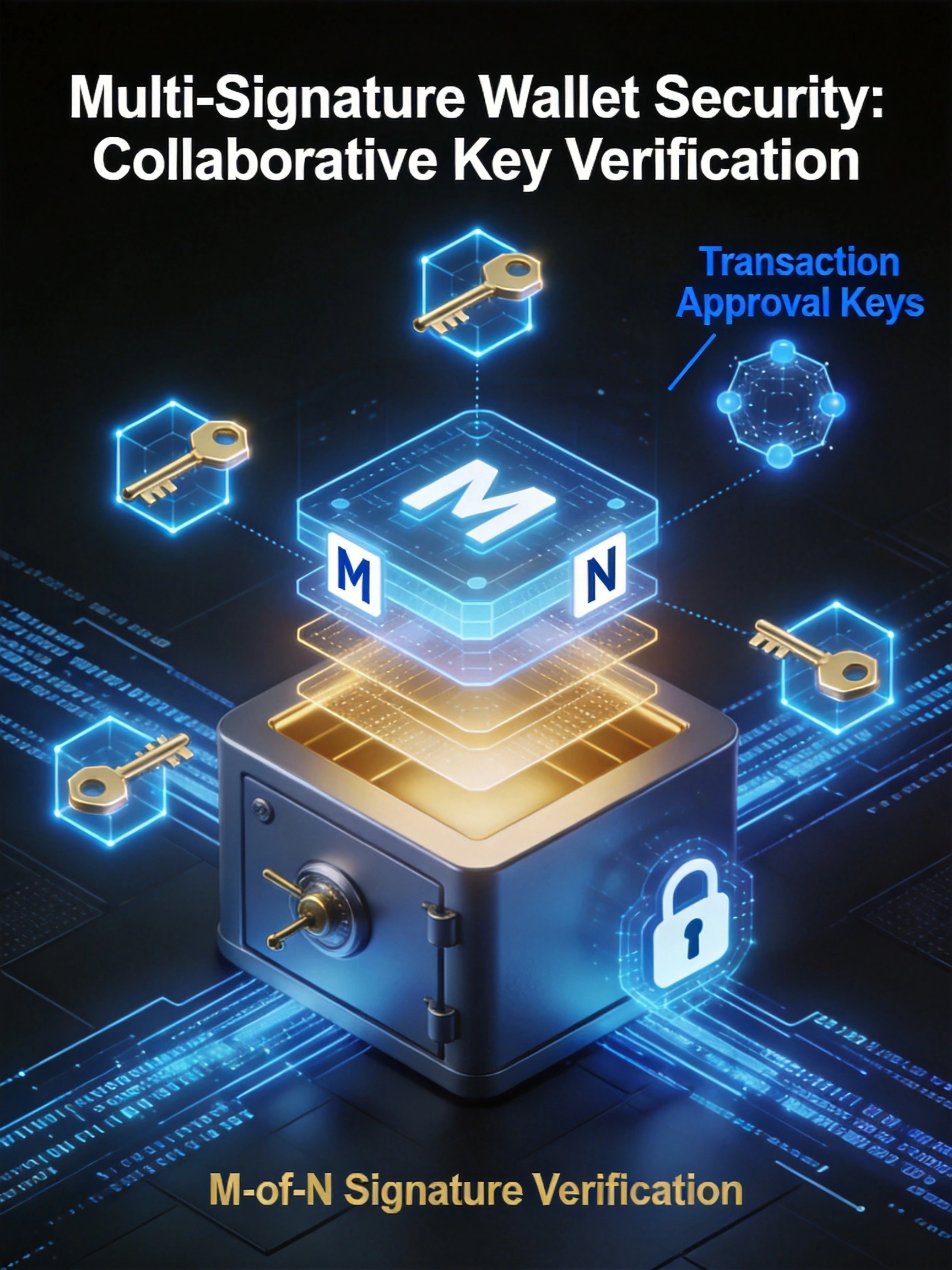
    当单私钥控制存在太大风险时,多签钱包提供了更安全的方案。要求多个私钥同时签名才能执行操作,大大降低了单点故障和内部作恶的风险。

    自定义多签实现

    solidity

    // SPDX-License-Identifier: MIT
    pragma solidity ^0.8.24;
    
    contract MultiSigAccess {
        struct Transaction {
            address to;
            uint256 value;
            bytes data;
            bool executed;
            uint256 confirmations;
        }
        
        uint256 public immutable required;
        uint256 public immutable totalOwners;
        
        address[] public owners;
        mapping(address => bool) public isOwner;
        mapping(uint256 => mapping(address => bool)) public confirmations;
        Transaction[] public transactions;
        
        event SubmitTransaction(
            address indexed owner, 
            uint256 indexed txIndex, 
            address to, 
            uint256 value
        );
        event ConfirmTransaction(address indexed owner, uint256 indexed txIndex);
        event ExecuteTransaction(address indexed owner, uint256 indexed txIndex);
        
        modifier onlyOwner() {
            require(isOwner[msg.sender], "Not an owner");
            _;
        }
        
        constructor(address[] memory _owners, uint256 _required) {
            require(_owners.length > 0, "Owners required");
            require(
                _required > 0 && _required <= _owners.length,
                "Invalid required number"
            );
            
            for (uint256 i = 0; i < _owners.length; i++) {
                require(_owners[i] != address(0), "Invalid owner");
                require(!isOwner[_owners[i]], "Duplicate owner");
                
                isOwner[_owners[i]] = true;
                owners.push(_owners[i]);
            }
            
            required = _required;
            totalOwners = _owners.length;
        }
        
        function submitTransaction(
            address to, 
            uint256 value, 
            bytes memory data
        ) external onlyOwner returns (uint256 txIndex) {
            txIndex = transactions.length;
            transactions.push(Transaction({
                to: to,
                value: value,
                data: data,
                executed: false,
                confirmations: 0
            }));
            
            emit SubmitTransaction(msg.sender, txIndex, to, value);
            confirmTransaction(txIndex);
        }
        
        function confirmTransaction(uint256 txIndex) public onlyOwner {
            require(txIndex < transactions.length, "Invalid tx");
            require(!transactions[txIndex].executed, "Already executed");
            require(!confirmations[txIndex][msg.sender], "Already confirmed");
            
            confirmations[txIndex][msg.sender] = true;
            transactions[txIndex].confirmations++;
            
            emit ConfirmTransaction(msg.sender, txIndex);
            
            if (transactions[txIndex].confirmations >= required) {
                executeTransaction(txIndex);
            }
        }
        
        function executeTransaction(uint256 txIndex) public onlyOwner {
            require(txIndex < transactions.length, "Invalid tx");
            require(!transactions[txIndex].executed, "Already executed");
            require(
                transactions[txIndex].confirmations >= required,
                "Not enough confirmations"
            );
            
            Transaction storage txData = transactions[txIndex];
            txData.executed = true;
            
            (bool success, ) = txData.to.call{value: txData.value}(txData.data);
            require(success, "Transaction failed");
            
            emit ExecuteTransaction(msg.sender, txIndex);
        }
        
        function getTransactionCount() external view returns (uint256) {
            return transactions.length;
        }
    }
    

    常见漏洞与防御策略

    即使实现了完善的访问控制框架,如果不注意细节,仍然可能存在安全漏洞。以下是常见的问题模式及其防御方法。

    权限检查缺失

    最常见也最危险的错误是忘记在关键函数上添加权限检查:

    solidity

    // 错误示例 - 缺少onlyOwner检查
    function withdrawAll() public {
        payable(owner()).transfer(address(this).balance);
    }
    
    // 正确示例
    function withdrawAll() public onlyOwner {
        payable(owner()).transfer(address(this).balance);
    }
    

    建议对所有非view函数进行审查,确保每个函数都有适当的权限控制或合理的开放策略。

    权限升级攻击

    攻击者可能通过某种方式提升自己的权限:

    solidity

    // 危险模式 - 允许用户自己获取角色
    function registerAsAdmin() external {
        grantRole(ADMIN_ROLE, msg.sender); // 任何人可以成为管理员!
    }
    
    // 防御模式 - 需要管理员确认
    function requestAdminRole() external {
        pendingAdmins[msg.sender] = true;
        // 管理员手动approve
    }
    
    function approveAdmin(address account) external onlyOwner {
        require(pendingAdmins[account], "No pending request");
        grantRole(ADMIN_ROLE, account);
        pendingAdmins[account] = false;
    }
    

    重入绕过检查

    如果权限检查发生在合约调用之后,可能被重入攻击绕过:

    solidity

    // 危险模式
    function withdraw(uint256 amount) external {
        require(balances[msg.sender] >= amount);
        
        // 检查在调用之前,但转账在之后
        (bool success, ) = msg.sender.call{value: amount}("");
        require(success, "Transfer failed");
        
        balances[msg.sender] -= amount;
    }
    
    // 安全模式 - Checks-Effects-Interactions
    mapping(address => uint256) public balances;
    
    function withdraw(uint256 amount) external {
        require(balances[msg.sender] >= amount, "Insufficient balance");
        
        // 先更新状态
        balances[msg.sender] -= amount;
        
        // 再转账
        (bool success, ) = msg.sender.call{value: amount}("");
        require(success, "Transfer failed");
    }
    

    完整的安全检查清单

    在部署合约之前,使用以下清单进行最终审查:

    1. 每个关键函数是否都有适当的权限检查? 列出所有应该受保护的函数,确认它们都有onlyRole或类似修饰器。
    2. 权限授予和撤销逻辑是否正确? 确保只有授权的地址才能修改权限。
    3. 是否有时间锁保护? 对于高风险操作(如升级合约、转出大量资金),是否引入了延迟?
    4. 是否使用了安全数学库? 防止整数溢出导致的权限检查绕过。
    5. 事件日志是否完整? 所有权限变更是否都有事件记录,便于审计。
    6. 是否进行了形式化验证? 对于关键基础设施,考虑使用形式化验证工具。

    最佳实践总结

    构建健壮的访问控制系统需要遵循以下原则:

    最小权限原则:每个角色只应拥有完成其职责所必需的权限。随着系统发展,应该定期审查并移除不再需要的权限。

    职责分离:关键操作应该分散到多个角色。例如,升级合约和暂停合约应该由不同的角色控制。

    分层防御:不要依赖单一的控制机制。使用多层权限检查,即使一层被突破,也有其他层提供保护。

    可审计性:所有权限变更和访问尝试都应该记录为事件。这不仅有助于事后审计,也是检测潜在攻击的关键。

    渐进式去中心化:项目初期可能需要更中心化的控制,但应该规划好如何随着项目成熟逐步将控制权转移给社区。

    应急恢复机制:即使设计再完善,也应该考虑密钥泄露等极端情况的应对方案,如时间锁、多签、历史备份等。

    相关文章链接

  • Solidity内联汇编与字节优化实战指南:深度榨干Gas性能

    Solidity内联汇编与字节优化实战指南:深度榨干Gas性能

    为什么需要内联汇编

    在大多数场景下,标准Solidity代码已经足够高效。但当你面对以下情况时,内联汇编就成为了必要的工具:需要绕过编译器优化失败的死角、追求极致的Gas消耗、或者访问某些高级EVM特性。

    内联汇编让你能够在Solidity代码中直接嵌入EVM字节码指令。这种方式绕过了编译器的高级抽象,直接与虚拟机底层对话。对于数组边界检查的消除、复杂位运算的实现、或者自定义内存布局的控制,内联汇编是唯一的选择。

    不过要记住,这是一把双刃剑。使用内联汇编意味着放弃Solidity提供的部分安全特性,包括类型检查和边界验证。所以只有在确认编译器无法生成最优代码时,才值得动用这把利器。

    EVM字节码调试图谱:Foundry Gas报告与存储槽分析实战

    Yul语言基础入门

    Solidity使用的内联汇编语言叫做Yul。它介于高级语言和原始字节码之间,保留了函数式的编程风格,同时能够精确控制每一条指令。

    基本语法结构

    内联汇编代码块用assembly关键字包裹,内部使用Yul语法:

    solidity

    // SPDX-License-Identifier: GPL-3.0
    pragma solidity ^0.8.24;
    
    contract AssemblyExample {
        function addWithAssembly(uint256 a, uint256 b) public pure returns (uint256 result) {
            assembly {
                result := add(a, b)
            }
        }
    }
    

    这段代码演示了最简单的内联汇编用法。在Yul中,add是加法操作码,result是Solidity变量,可以直接在汇编块中读写。

    函数式 vs 指令式风格

    Yul支持两种代码风格。函数式写法更易读,指令式写法更接近实际字节码执行流程:

    solidity

    // 函数式风格 - 推荐
    assembly {
        let sum := add(3, add(x, y))
    }
    
    // 指令式风格 - 堆栈可视化更清晰
    assembly {
        push3 3
        push1 x
        add
        push1 y
        add
    }
    

    两种风格最终生成相同的字节码,但函数式写法更容易维护。建议优先使用函数式风格,除非你需要精确控制堆栈布局。

    内存管理实战

    EVM的内存模型相对简单:自由的读写空间,从0x000xFF被Solidity运行时占用,0x800xFF保留给临时计算,真正的自由空间从0x100(256)开始。内存分配采用顺序分配模式,通过0x40位置的”空闲内存指针”来追踪下一个可用位置。

    内存读写操作

    solidity

    contract MemoryOperations {
        function writeAndRead() public pure returns (uint256 value) {
            assembly {
                // 获取空闲内存指针
                let ptr := mload(0x40)
                
                // 在ptr位置写入值
                mstore(ptr, 42)
                
                // 更新空闲内存指针(32字节对齐)
                mstore(0x40, add(ptr, 0x20))
                
                // 读取值
                value := mload(ptr)
            }
        }
        
        // 批量内存写入的高效实现
        function batchStore(uint256[] calldata data) public pure returns (uint256 sum) {
            assembly {
                // 跳过长度字段,从数据区开始
                let arr := add(data.offset, 0x20)
                let end := add(arr, mul(data.length, 0x20))
                
                for { } lt(arr, end) { arr := add(arr, 0x20) } {
                    sum := add(sum, mload(arr))
                }
            }
        }
    }
    

    内存安全的标注

    从Solidity 0.8版本开始,如果你的汇编代码遵循Solidity的内存模型,应该使用"memory-safe"标注。这允许编译器进行更积极的内存优化:

    solidity

    assembly ("memory-safe") {
        let ptr := mload(0x40)
        mstore(ptr, 0x1234)
        mstore(0x40, add(ptr, 0x20))
    }
    

    这个标注告诉编译器:这个汇编块不会破坏Solidity的内存不变量,可以安全地移动变量和优化内存访问。

    存储操作与状态管理

    存储是EVM中最昂贵的操作,每一笔存储写入都需要消耗大量Gas。内联汇编能帮助我们更精细地控制存储操作,实现特定的优化模式。

    紧凑存储布局

    EVM的存储槽是256位(32字节),但很多场景下我们只需要存储较小的值。传统的做法是使用多个槽,但通过内联汇编可以实现单槽紧凑存储:

    solidity

    // 单槽存储多个小值
    contract CompactStorage {
        function packValues(uint128 a, uint128 b) public {
            assembly {
                // 将两个128位值打包到一个槽中
                sstore(0, add(a, shl(128, b)))
            }
        }
        
        function unpackValues() public view returns (uint128 a, uint128 b) {
            assembly {
                let packed := sload(0)
                a := and(packed, 0xFFFFFFFFFFFFFFFFFFFFFFFFFFFFFFFF)
                b := shr(128, packed)
            }
        }
    }
    

    这种技术在需要大量状态变量的合约中能显著降低SStore的Gas消耗。需要注意的是,读取紧凑存储的值比普通读取稍贵,但对于大量状态变量的场景,整体收益仍然可观。

    存储预加载技巧

    存储读取是EVM中相对昂贵的操作。当你的合约需要多次读取同一个存储槽时,可以考虑使用内存作为缓存:

    solidity

    contract StorageCaching {
        uint256 public constant DATA_SLOT = 42;
        
        function readWithCache() public view returns (uint256 result) {
            uint256 cachedValue;
            assembly {
                cachedValue := sload(DATA_SLOT)
            }
            
            // 在Solidity中使用缓存值,避免重复SLoad
            result = cachedValue * 2;
            
            assembly {
                // 如果需要写回,可以检查值是否改变
                let current := sload(DATA_SLOT)
                if iszero(eq(cachedValue, current)) {
                    sstore(DATA_SLOT, cachedValue)
                }
            }
        }
    }
    

    字节级优化技术

    内联汇编最强大的应用场景是字节级优化。编译器在某些特定模式上的优化可能不够激进,手写汇编能够实现更好的效果。

    数组求和的优化

    数组边界检查是编译器生成代码中的常见开销。当你确定数组访问不会越界时(需要自己保证),可以用汇编消除这些检查:

    solidity

    contract ArraySum {
        function sumSolidity(uint256[] memory data) public pure returns (uint256 sum) {
            for (uint256 i = 0; i < data.length; i++) {
                sum += data[i];
            }
        }
        
        function sumAssembly(uint256[] memory data) public pure returns (uint256 sum) {
            assembly {
                let len := mload(data)
                let ptr := add(data, 0x20)
                let end := add(ptr, mul(len, 0x20))
                
                for { } lt(ptr, end) { ptr := add(ptr, 0x20) } {
                    sum := add(sum, mload(ptr))
                }
            }
        }
    }
    

    在生产环境中使用优化版本时,务必确保调用者传入的数组是有效的,且代码逻辑保证不会越界访问。

    位运算加速

    某些数学运算可以用位运算替代,从而大幅提升性能:

    solidity

    contract BitOptimizations {
        // 用位移替代乘法
        function multiplyByPowerOfTwo(uint256 x, uint8 power) public pure returns (uint256 result) {
            assembly {
                result := shl(power, x)
            }
        }
        
        // 用位移替代除法
        function divideByPowerOfTwo(uint256 x, uint8 power) public pure returns (uint256 result) {
            assembly {
                result := shr(power, x)
            }
        }
        
        // 快速取模(当divisor是2的幂时)
        function modPowerOfTwo(uint256 x, uint256 divisor) public pure returns (uint256 result) {
            require(divisor > 0 && (divisor & (divisor - 1)) == 0, "Not power of two");
            assembly {
                result := and(x, sub(divisor, 1))
            }
        }
    }
    

    零值检查优化

    Solidity的零值检查在某些场景下可能不够高效。通过汇编可以实现更激进的检查模式:

    solidity

    contract ZeroChecks {
        // 高效的非零检查
        function requireNonZero(uint256 x) public pure {
            assembly {
                if iszero(x) {
                    mstore(0x00, 0x20)
                    mstore(0x20, 0x736d617274636f6e7472616374000000000000000000000000000000000000)
                    revert(0x1c, 0x04)
                }
            }
        }
        
        // 使用舍入方式计算最小值
        function min(uint256 a, uint256 b) public pure returns (uint256 result) {
            assembly {
                result := sub(a, sub(a, b))
                if slt(result, 0) {
                    result := b
                }
            }
        }
    }
    

    合约代码获取

    内联汇编的一个常见用途是检查其他合约的字节码。这在实现某些白名单机制或者合约验证时非常有用:

    solidity

    library CodeReader {
        function getCodeSize(address target) internal view returns (uint256 size) {
            assembly {
                size := extcodesize(target)
            }
        }
        
        function getCodeHash(address target) internal view returns (bytes32 hash) {
            assembly {
                hash := extcodehash(target)
            }
        }
    }
    
    contract CodeChecker {
        using CodeReader for address;
        
        function isContract(address target) public view returns (bool) {
            return target.getCodeSize() > 0;
        }
        
        function verifyContractCode(address target, bytes32 expectedHash) 
            public 
            view 
            returns (bool) 
        {
            return target.getCodeHash() == expectedHash;
        }
    }
    

    实战:构建高效的数据验证器

    让我们用一个完整例子来整合所有技术:实现一个高效的数据哈希验证器:

    solidity

    // SPDX-License-Identifier: MIT
    pragma solidity ^0.8.24;
    
    contract EfficientHasher {
        // 使用内联汇编优化哈希计算
        function hashData(bytes memory data) public pure returns (bytes32) {
            bytes32 result;
            assembly {
                // 从内存加载数据并计算Keccak256
                result := keccak256(add(data, 0x20), mload(data))
            }
            return result;
        }
        
        // 批量验证 - 优化版
        function verifyBatch(
            bytes[] memory dataArray,
            bytes32[] memory expectedHashes
        ) public pure returns (bool) {
            require(dataArray.length == expectedHashes.length, "Length mismatch");
            
            assembly {
                let len := dataArray.length
                
                // 指向两个数组的数据区域
                let dataPtr := add(dataArray, 0x20)
                let hashPtr := add(expectedHashes, 0x20)
                
                for { let i := 0 } lt(i, len) { i := add(i, 1) } {
                    // 计算当前数据的哈希
                    let dataLen := mload(dataPtr)
                    let actualHash := keccak256(add(dataPtr, 0x20), dataLen)
                    
                    // 与预期值比较
                    if iszero(eq(actualHash, mload(hashPtr))) {
                        // 找到不匹配项,返回失败
                        mstore(0, 0)
                        return(0, 0x20)
                    }
                    
                    // 移动到下一个元素
                    dataPtr := add(dataPtr, 0x20)
                    hashPtr := add(hashPtr, 0x20)
                }
            }
            
            // 所有验证通过
            return true;
        }
    }
    

    调试与最佳实践

    内联汇编的调试比纯Solidity困难很多。以下是一些实用的调试技巧:

    使用事件记录状态

    solidity

    contract AssemblyDebugger {
        event DebugValue(string name, uint256 value);
        event DebugBytes(string name, bytes32 value);
        
        function debugValue(string calldata name, uint256 value) internal {
            emit DebugValue(name, value);
        }
        
        // 在汇编中记录中间值
        function computeWithDebug(uint256 x) public returns (uint256 result) {
            debugValue("Input", x);
            
            assembly {
                let temp := add(x, 100)
                sstore(0, temp)
                result := temp
            }
            
            debugValue("Result", result);
        }
    }
    

    最佳实践总结

    编写内联汇编代码时,应该遵循以下原则:

    1. 先用纯Solidity实现:确保逻辑正确后再考虑汇编优化
    2. 模块化封装:将汇编逻辑封装到库函数中,减少错误风险
    3. 添加详细注释:说明每一步操作的目的和预期效果
    4. 标注内存安全:使用"memory-safe"允许更多优化
    5. 测试边界情况:汇编代码的错误更难追踪,需要更全面的测试
    6. 保持可读性:使用有意义的变量名,不要过度压缩代码

    性能对比测试

    让我们通过一个完整的测试来展示内联汇编优化的实际效果:

    solidity

    // SPDX-License-Identifier: MIT
    pragma solidity ^0.8.24;
    
    import "forge-std/Test.sol";
    
    contract AssemblyBenchmark is Test {
        uint256[] testData;
        
        function setUp() public {
            testData = new uint256[](1000);
            for (uint256 i = 0; i < 1000; i++) {
                testData[i] = i;
            }
        }
        
        function testSoliditySum() public view {
            uint256 sum;
            for (uint256 i = 0; i < testData.length; i++) {
                sum += testData[i];
            }
        }
        
        function testAssemblySum() public pure {
            uint256 sum;
            assembly {
                let len := calldataload(0x04)
                let ptr := add(calldataload(0x24), 0x20)
                let end := add(ptr, mul(len, 0x20))
                for { } lt(ptr, end) { ptr := add(ptr, 0x20) } {
                    sum := add(sum, calldataload(sub(ptr, 0x20)))
                }
            }
        }
    }
    

    运行forge test并查看Gas报告,你会看到Assembly版本在处理大数据集时显著更省Gas。

    总结

    内联汇编是Solidity开发者工具箱中最强大的武器之一。它让你能够突破编译器优化的限制,实现极致的Gas效率和精确的EVM控制。但这把双刃剑需要谨慎使用——只有在充分理解EVM行为、确认编译器无法生成最优代码、且有足够的测试覆盖的情况下,才应该使用内联汇编。

    对于大多数应用场景,标准的Solidity代码已经足够高效。建议采用渐进式的优化策略:从纯Solidity开始,只有在性能分析确认存在瓶颈时,才针对性地使用汇编优化那些关键路径。保持代码的可读性和可维护性永远是第一位的。

    相关文章链接

  • EIP-712签名验证实战:智能合约中实现安全以太坊签名

    EIP-712签名验证实战:智能合约中实现安全以太坊签名

    Web3应用中,让用户签署消息来授权操作是常见需求。相比每次操作都发送交易,签名可以大幅降低成本,而且用户体验也更好。但传统的eth_sign方法缺乏结构化,用户很难理解自己到底在签什么。EIP-712就是为了解决这个问题而诞生的。

    为什么需要EIP-712

    在没有EIP-712之前,以太坊签名是纯粹的字节数据。用户看到的可能是一串十六进制字符串,根本不知道自己签的内容是什么。这带来两个严重问题:

    1. 签名欺骗 – 恶意网站可以构造看起来无害的消息,实际包含恶意操作
    2. 用户体验差 – 用户无法验证消息内容,信任成本高

    EIP-712引入了类型化结构化数据的概念,让签名内容和签名请求都可以被人类阅读和理解。这不仅提升了安全性,也大大改善了用户体验。

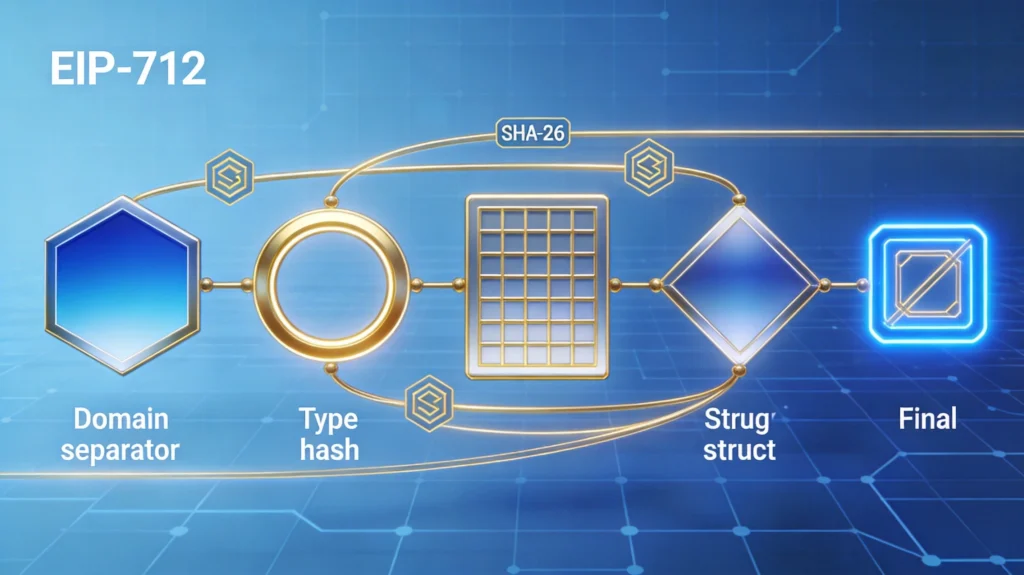
    EIP-712结构化签名流程图,从域分隔符到签名验证的完整路径

    EIP-712的核心概念

    理解EIP-712需要掌握几个核心概念:

    Domain Separator

    域分隔符定义了签名的上下文,防止跨应用重放攻击。它包含:

    • name – 应用名称
    • version – 签名方案的版本号
    • chainId – 链ID,防止跨链攻击
    • verifyingContract – 验证签名的合约地址
    • salt – 可选的随机盐值

    solidity

    struct EIP712Domain {
        string name;
        string version;
        uint256 chainId;
        address verifyingContract;
        bytes32 salt;
    }
    

    Message Structure

    实际签名的消息是定义好的结构体,每种操作类型对应一个独立的结构:

    solidity

    struct Person {
        string name;
        address wallet;
    }
    
    struct Mail {
        Person from;
        Person to;
        string contents;
    }
    
    contract EIP712Example {
        bytes32 constant MAIL_TYPEHASH = keccak256(
            "Mail(Person from,Person to,string contents)Person(string name,address wallet)"
        );
        
        bytes32 constant PERSON_TYPEHASH = keccak256(
            "Person(string name,address wallet)"
        );
        
        bytes32 public domainSeparator;
        
        constructor() {
            domainSeparator = keccak256(abi.encode(
                keccak256("EIP712Domain(string name,string version,uint256 chainId,address verifyingContract,bytes32 salt)"),
                keccak256("Mail"),
                keccak256("1"),
                block.chainid,
                address(this),
                bytes32(0) // salt,可以自定义
            ));
        }
    }
    

    哈希计算流程

    签名的完整哈希计算遵循特定的层次结构:

    plaintext

    hashStruct(message) = keccak256(typeHash ‖ data)
    
    hash(message) = keccak256(0x1901 ‖ domainSeparator ‖ hashStruct(message))
    

    0x1901是固定的magic bytes,标识这是EIP-712签名。

    完整签名验证合约实现

    下面是一个完整的EIP-712签名验证合约,支持委托授权模式:

    solidity

    // SPDX-License-Identifier: MIT
    pragma solidity ^0.8.24;
    
    library ECDSA {
        function recover(bytes32 hash, bytes memory signature)
            internal
            pure
            returns (address)
        {
            require(signature.length == 65, "Invalid signature length");
            
            bytes32 r;
            bytes32 s;
            uint8 v;
            
            assembly {
                r := mload(add(signature, 32))
                s := mload(add(signature, 64))
                v := byte(0, mload(add(signature, 96)))
            }
            
            return ecrecover(hash, v, r, s);
        }
        
        function toEthSignedMessageHash(bytes32 hash)
            internal
            pure
            returns (bytes32)
        {
            return keccak256(abi.encodePacked(
                "\x19Ethereum Signed Message:\n32",
                hash
            ));
        }
    }
    
    contract SecureDelegate {
        using ECDSA for bytes32;
        
        // 委托授权结构
        struct Delegation {
            address delegate;      // 被委托的地址
            uint256 nonce;         // 防重放 nonce
            uint256 deadline;      // 过期时间
        }
        
        // 委托类型哈希
        bytes32 constant DELEGATION_TYPEHASH = keccak256(
            "Delegation(address delegate,uint256 nonce,uint256 deadline)"
        );
        
        // 域名分隔符类型哈希
        bytes32 constant DOMAIN_TYPEHASH = keccak256(
            "EIP712Domain(string name,string version,uint256 chainId,address verifyingContract)"
        );
        
        // 域名配置
        string public name;
        string public version = "1";
        
        // 委托者的nonce
        mapping(address => uint256) public nonces;
        
        // 已使用的签名哈希(用于一次性签名)
        mapping(bytes32 => bool) public usedSignatures;
        
        event DelegateUpdated(address indexed delegator, address indexed newDelegate);
        event DelegationExecuted(
            address indexed delegator,
            address indexed delegate,
            bytes32 indexed delegationHash
        );
        
        constructor(string memory _name) {
            name = _name;
        }
        
        function getDomainSeparator() public view returns (bytes32) {
            return keccak256(abi.encode(
                DOMAIN_TYPEHASH,
                keccak256(bytes(name)),
                keccak256(bytes(version)),
                block.chainid,
                address(this)
            ));
        }
        
        function _hashDelegation(Delegation memory delegation)
            internal
            view
            returns (bytes32)
        {
            return keccak256(abi.encode(
                DELEGATION_TYPEHASH,
                delegation.delegate,
                delegation.nonce,
                delegation.deadline
            ));
        }
        
        function _hashTypedData(Delegation memory delegation)
            internal
            view
            returns (bytes32)
        {
            bytes32 hash = _hashDelegation(delegation);
            return keccak256(abi.encodePacked(
                "\x19\x01",
                getDomainSeparator(),
                hash
            ));
        }
        
        /**
         * @dev 验证签名并返回签名者地址
         */
        function verify(
            Delegation memory delegation,
            bytes memory signature
        ) public view returns (address) {
            require(delegation.deadline >= block.timestamp, "Delegation expired");
            
            bytes32 typedHash = _hashTypedData(delegation);
            address signer = typedHash.recover(signature);
            
            require(signer != address(0), "Invalid signature");
            require(signer == msg.sender || isAuthorizedDelegate(signer), "Not authorized");
            
            return signer;
        }
        
        /**
         * @dev 检查签名是否已使用(一次性签名模式)
         */
        modifier notUsed(bytes32 hash) {
            require(!usedSignatures[hash], "Signature already used");
            _;
        }
        
        /**
         * @dev 执行委托操作(一次性签名模式)
         */
        function executeDelegation(
            Delegation memory delegation,
            bytes memory signature
        ) external notUsed(_hashTypedData(delegation)) returns (bool) {
            bytes32 typedHash = _hashTypedData(delegation);
            
            // 验证签名
            address signer = typedHash.recover(signature);
            require(signer != address(0), "Invalid signature");
            require(delegation.deadline >= block.timestamp, "Delegation expired");
            
            // 标记签名已使用
            usedSignatures[typedHash] = true;
            
            // 更新nonce
            nonces[signer]++;
            
            emit DelegationExecuted(signer, delegation.delegate, typedHash);
            
            return true;
        }
        
        /**
         * @dev 批量执行多个委托
         */
        function executeBatch(
            Delegation[] memory delegations,
            bytes[] memory signatures
        ) external returns (bool[] memory results) {
            require(delegations.length == signatures.length, "Length mismatch");
            
            results = new bool[](delegations.length);
            
            for (uint256 i = 0; i < delegations.length; i++) {
                bytes32 typedHash = _hashTypedData(delegations[i]);
                
                if (usedSignatures[typedHash]) {
                    results[i] = false;
                    continue;
                }
                
                address signer = typedHash.recover(signatures[i]);
                
                if (signer == address(0) || delegations[i].deadline < block.timestamp) {
                    results[i] = false;
                    continue;
                }
                
                usedSignatures[typedHash] = true;
                nonces[signer]++;
                
                emit DelegationExecuted(signer, delegations[i].delegate, typedHash);
                results[i] = true;
            }
        }
        
        /**
         * @dev 检查地址是否为授权委托者
         */
        function isAuthorizedDelegate(address) public pure returns (bool) {
            // 可以扩展此逻辑,实现更复杂的授权机制
            return true;
        }
        
        /**
         * @dev 获取当前nonce
         */
        function getNonce(address account) public view returns (uint256) {
            return nonces[account];
        }
    }
    

    这个合约展示了EIP-712签名的核心验证逻辑,包括域分隔符计算、类型哈希、签名恢复等关键步骤。

    前端签名生成

    合约端的验证需要前端生成对应的签名。以下是使用ethers.js v6生成签名的示例:

    javascript

    import { ethers } from "ethers";
    
    const DOMAIN = {
      name: "SecureDelegate",
      version: "1",
      chainId: 1, // 替换为实际链ID
      verifyingContract: "0x1234567890123456789012345678901234567890", // 替换为合约地址
    };
    
    const DELEGATION_TYPE = {
      Delegation: [
        { name: "delegate", type: "address" },
        { name: "nonce", type: "uint256" },
        { name: "deadline", type: "uint256" },
      ],
    };
    
    async function signDelegation(delegator, delegateAddress, deadline, nonce) {
      const provider = new ethers.BrowserProvider(window.ethereum);
      const signer = await provider.getSigner();
      
      const message = {
        delegate: delegateAddress,
        nonce: nonce,
        deadline: deadline,
      };
      
      const signature = await signer.signTypedData(
        DOMAIN,
        DELEGATION_TYPE,
        message
      );
      
      return signature;
    }
    
    // 使用示例
    const deadline = Math.floor(Date.now() / 1000) + 3600; // 1小时后过期
    const nonce = await contract.nonces(userAddress);
    const signature = await signDelegation(userAddress, delegateAddress, deadline, nonce);
    

    ethers.js会自动处理类型化数据的哈希计算和签名,大大简化了EIP-712的实现复杂度。

    安全性注意事项

    EIP-712签名虽然比裸字节签名安全得多,但在实现时仍需注意以下几点:

    1. 防止签名重放

    每次签名应该包含唯一的nonce和合理的过期时间:

    solidity

    function verifyWithReplayProtection(
        Delegation memory delegation,
        bytes memory signature
    ) public view returns (address) {
        // 检查nonce是否匹配
        require(delegation.nonce == nonces[msg.sender], "Invalid nonce");
        
        // 检查过期时间
        require(delegation.deadline >= block.timestamp, "Signature expired");
        
        // ... 其他验证逻辑
    }
    

    2. 验证签名者身份

    签名恢复可能返回address(0),这是判断签名无效的关键条件:

    solidity

    address signer = ECDSA.recover(hash, signature);
    require(signer != address(0), "ECDSA: invalid signature");
    // 不要忘记检查 signer 是否在预期的身份范围内
    require(signer == expectedAddress, "Wrong signer");
    

    3. 完整的域分隔符

    域名分隔符的每个字段都应该正确设置,特别是chainId:

    solidity

    // 错误的做法:在测试网上使用硬编码的chainId
    bytes32 domainSeparator = keccak256(abi.encode(
        keccak256("EIP712Domain(string name,string version,uint256 chainId,address verifyingContract)"),
        keccak256("MyApp"),
        keccak256("1"),
        1, // 硬编码的mainnet chainId
        address(this)
    ));
    
    // 正确的做法:使用当前链的chainId
    bytes32 domainSeparator = keccak256(abi.encode(
        keccak256("EIP712Domain(string name,string version,uint256 chainId,address verifyingContract)"),
        keccak256("MyApp"),
        keccak256("1"),
        block.chainid, // 使用动态chainId
        address(this)
    ));
    

    4. 一次性签名 vs 可重用授权

    根据业务场景选择合适的签名模式:

    solidity

    // 一次性签名:每次操作都需要新签名
    mapping(bytes32 => bool) public usedSignatures;
    function executeOnce(bytes32 hash, bytes memory signature) {
        require(!usedSignatures[hash], "Already used");
        usedSignatures[hash] = true;
        // 执行操作
    }
    
    // 可重用授权:设置一个较长的有效期
    mapping(address => uint256) public authorizedUntil;
    function executeWithAuth(address signer) {
        require(authorizedUntil[signer] >= block.timestamp, "Authorization expired");
        // 执行操作
    }
    

    实际应用场景

    EIP-712签名在以下场景特别有用:

    1. DAO治理投票 – 离线签名投票,减少投票者的Gas成本
    2. DEX限价单 – 用户签名挂单,匹配引擎执行,无需每次都发交易
    3. 许可/白名单 – 用户签名加入白名单的操作证明
    4. 跨链消息 – 在一条链上签名,在另一条链上验证

    solidity

    contract SimpleOffchainVoting {
        struct Vote {
            uint256 proposalId;
            bool support;
            uint256 deadline;
        }
        
        bytes32 constant VOTE_TYPEHASH = keccak256(
            "Vote(uint256 proposalId,bool support,uint256 deadline)"
        );
        
        mapping(uint256 => mapping(address => bool)) public hasVoted;
        mapping(uint256 => uint256) public votesFor;
        mapping(uint256 => uint256) public votesAgainst;
        
        function castVote(Vote memory vote, bytes memory signature) public {
            bytes32 voteHash = keccak256(abi.encode(
                VOTE_TYPEHASH,
                vote.proposalId,
                vote.support,
                vote.deadline
            ));
            
            // 验证签名
            address voter = ECDSA.recover(
                ECDSA.toEthSignedMessageHash(voteHash),
                signature
            );
            
            require(voter == msg.sender, "Signature mismatch");
            require(!hasVoted[vote.proposalId][voter], "Already voted");
            require(vote.deadline >= block.timestamp, "Vote expired");
            
            // 记录投票
            hasVoted[vote.proposalId][voter] = true;
            if (vote.support) {
                votesFor[vote.proposalId]++;
            } else {
                votesAgainst[vote.proposalId]++;
            }
        }
    }
    

    常见错误与调试

    类型字符串不匹配

    前端和合约端的类型定义必须完全一致:

    javascript

    // 前端 - 错误的顺序
    const TYPE = {
      Person: [
        { name: "wallet", type: "address" }, // 顺序错误
        { name: "name", type: "string" },
      ]
    };
    
    // 合约端
    bytes32 constant PERSON_TYPEHASH = keccak256(
        "Person(address wallet,string name)" // 必须匹配
    );
    

    缺失链ID验证

    生产环境中务必验证chainId:

    solidity

    require(
        keccak256(abi.encodePacked(DOMAIN.chainId)) == keccak256(abi.encodePacked(block.chainid)),
        "Chain ID mismatch"
    );
    

    签名版本不兼容

    ethers.js v5和v6的API有所不同:

    javascript

    // ethers.js v6
    const signature = await signer.signTypedData(domain, types, message);
    
    // ethers.js v5
    const signature = await provider.getSigner()._signTypedData(domain, types, message);
    

    总结

    EIP-712为以太坊签名带来了结构化和可读性,是构建安全DApp的重要工具。实现时需要关注:

    • 完整的域名分隔符 – 包含name、version、chainId、verifyingContract
    • 正确的类型哈希 – 前后端类型定义必须一致
    • 防重放机制 – nonce和deadline是必需的
    • 签名者验证 – 验证恢复地址的有效性

    通过合理使用EIP-712,可以显著提升应用的安全性和用户体验,同时降低用户的Gas成本。这在高频操作场景(如DAO投票、DEX交易)中尤为重要。

    相关资源

  • Solidity循环与映射深度解析:从数据结构层面优化合约性能

    Solidity循环与映射深度解析:从数据结构层面优化合约性能

    循环与映射是Solidity开发中最常用也最需要谨慎处理的基础结构。很多开发者在编写合约时容易忽视它们的性能影响,结果导致Gas费用居高不下,甚至触发区块Gas限制导致交易失败。这篇文章我们就来深入聊聊循环与映射的那些事儿,从原理出发找到真正的优化方案。

    为什么循环和映射值得关注

    以太坊虚拟机EVM是一个资源受限的执行环境,每一次操作都需要消耗Gas。而循环和映射恰恰是两个“Gas消耗大户”:循环会重复执行相同的操作,映射则在每次读写时涉及复杂的状态读写。

    我见过很多初学者的合约代码里,遍历一个数组就能消耗掉大半个区块的Gas。这不是EVM的问题,而是代码结构的问题。同样的业务逻辑,换一种数据结构或者循环方式,Gas消耗可能相差一个数量级。

    理解循环与映射的底层机制,是写出高效合约的第一步。

    Solidity Gas优化策略对比图,映射存储布局与循环性能分析

    Solidity中的循环语句

    Solidity支持三种循环语法:for循环、while循环和do-while循环。从Gas消耗角度看,它们几乎没有区别,但使用场景和代码可读性有所不同。

    for循环的基础使用

    for循环是最常用的循环结构,特别适合已知迭代次数的场景:

    solidity

    // SPDX-License-Identifier: MIT
    pragma solidity ^0.8.24;
    
    contract LoopExample {
        uint256[] public values;
        
        constructor() {
            values = [10, 20, 30, 40, 50];
        }
        
        // 计算数组总和
        function sumArray() public view returns (uint256) {
            uint256 total = 0;
            for (uint256 i = 0; i < values.length; i++) {
                total += values[i];
            }
            return total;
        }
        
        // 计算平均值
        function averageArray() public view returns (uint256) {
            if (values.length == 0) revert("Empty array");
            uint256 total = 0;
            for (uint256 i = 0; i < values.length; i++) {
                total += values[i];
            }
            return total / values.length;
        }
    }
    

    这个例子展示了for循环的基本用法。注意到我在循环外部声明了total变量,这是因为在Solidity中,内存变量和存储变量的Gas消耗差异巨大。每次修改存储变量都需要额外的Gas,而内存变量只在函数执行期间存在。

    循环中的常见陷阱

    循环中有一个很容易犯的错误:每次迭代都访问storage变量:

    solidity

    // 不推荐的写法:每次迭代都读取storage
    function sumWithBadPractice() public view returns (uint256) {
        uint256 total = 0;
        for (uint256 i = 0; i < values.length; i++) {
            total += values[i]; // values[i]每次都从storage读取
        }
        return total;
    }
    
    // 推荐的写法:先加载到内存
    function sumWithGoodPractice() public view returns (uint256) {
        uint256 total = 0;
        uint256[] memory vals = values; // 一次storage读取
        for (uint256 i = 0; i < vals.length; i++) {
            total += vals[i]; // 后续访问内存
        }
        return total;
    }
    

    在大型数组上,这两种写法的Gas差异会非常明显。storage读取的Cold访问费用大约是2100 Gas,而内存访问几乎可以忽略不计。

    while循环的适用场景

    while循环适合迭代次数不确定的情况,比如遍历链表结构:

    solidity

    contract LinkedListExample {
        struct Node {
            uint256 value;
            uint256 next; // 指向下一个节点的索引,0表示没有下一个
        }
        
        Node[] public nodes;
        uint256 public head; // 链表头节点索引
        
        constructor() {
            head = 0;
            nodes.push(Node({value: 0, next: 0})); // 创建虚拟头节点
        }
        
        function append(uint256 value) public {
            uint256 newIndex = nodes.length;
            nodes.push(Node({value: value, next: 0}));
            
            // 找到链表尾部
            uint256 current = head;
            while (nodes[current].next != 0) {
                current = nodes[current].next;
            }
            nodes[current].next = newIndex;
        }
        
        function traverse() public view returns (uint256[] memory) {
            uint256 count = 0;
            uint256 current = head;
            while (current != 0) {
                count++;
                current = nodes[current].next;
            }
            
            uint256[] memory result = new uint256[](count);
            current = head;
            uint256 index = 0;
            while (current != 0) {
                result[index] = nodes[current].value;
                current = nodes[current].next;
                index++;
            }
            return result;
        }
    }
    

    这个链表的例子展示了while循环在处理非线性结构时的优势。虽然它没有数组的随机访问能力,但插入操作的Gas消耗更低,因为不需要移动后面的元素。

    映射mapping的底层机制

    映射是Solidity中最常用的键值对数据结构。与传统编程语言不同,Solidity中的mapping是零初始化的,所有键都默认映射到零值。

    mapping的基础语法

    solidity

    contract MappingBasics {
        // 基础映射
        mapping(address => uint256) public balances;
        
        // 嵌套映射
        mapping(address => mapping(address => uint256)) public allowances;
        
        // 复杂结构映射
        mapping(bytes32 => UserData) public userData;
        
        struct UserData {
            string name;
            uint256 registrationTime;
            bool isActive;
        }
        
        function setUser(address addr, string memory name) public {
            userData[keccak256(abi.encodePacked(addr))] = UserData({
                name: name,
                registrationTime: block.timestamp,
                isActive: true
            });
        }
        
        function getUser(address addr) public view returns (UserData memory) {
            return userData[keccak256(abi.encodePacked(addr))];
        }
        
        function approve(address spender, uint256 amount) public {
            allowances[msg.sender][spender] = amount;
        }
        
        function transfer(address from, address to, uint256 amount) public {
            require(allowances[from][msg.sender] >= amount, "Insufficient allowance");
            balances[from] -= amount;
            balances[to] += amount;
            allowances[from][msg.sender] -= amount;
        }
    }
    

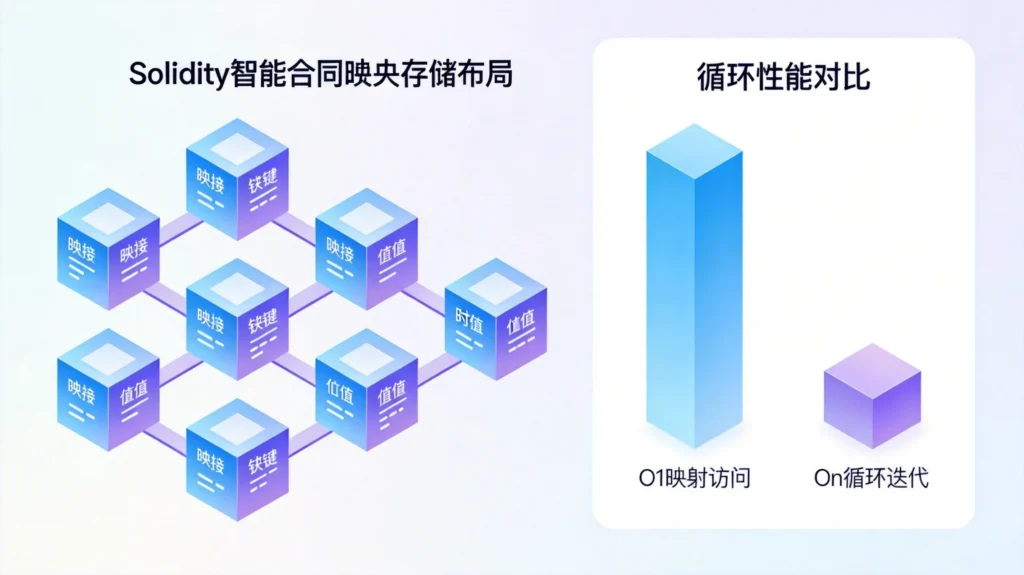
    mapping的优势在于访问时间复杂度是O(1),无论映射中存储了多少数据,读取和写入的Gas消耗都是固定的。这是因为以太坊的存储模型本质上是键值对数据库,键的哈希值直接决定了值存储的位置。

    理解mapping的存储布局

    Solidity中的mapping并不直接存储在合约的数据区域,而是通过特殊的算法计算键对应的存储位置。要理解这个机制,需要看看Yul层面的实现:

    solidity

    contract StorageLayout {
        uint256 public singleValue;  // slot 0
        mapping(address => uint256) public addressToValue; // slot 1
        
        // 对应的存储布局:
        // singleValue存储在 slot 0
        // addressToValue[key] 存储在 keccak256(key . 1),其中1是addressToValue的slot编号
    }
    

    这个布局机制有几个重要含义:

    1. 无法直接遍历mapping – 没有办法枚举所有可能的键
    2. 读取是确定性的 – 给定键和slot位置,可以计算出存储位置
    3. Gas消耗稳定 – 无论mapping中有多少数据,单次读写成本固定

    mapping的高级用法:反向索引

    有时候我们需要根据值来查找键,比如根据用户名查找地址。这时可以维护一个反向索引:

    solidity

    contract ReverseIndex {
        // 地址到用户名
        mapping(address => string) public addressToUsername;
        
        // 用户名到地址(反向索引)
        mapping(string => address) public usernameToAddress;
        
        // 所有注册用户的列表
        address[] public allUsers;
        
        function register(string memory username) public {
            require(bytes(usernameToAddress[username]).length == 0, "Username taken");
            require(bytes(addressToUsername[msg.sender]).length == 0, "Already registered");
            
            addressToUsername[msg.sender] = username;
            usernameToAddress[username] = msg.sender;
            allUsers.push(msg.sender);
        }
        
        function findAddressByUsername(string memory username) public view returns (address) {
            return usernameToAddress[username];
        }
        
        function getAllUsers() public view returns (address[] memory) {
            return allUsers;
        }
    }
    

    这种设计虽然增加了写入时的Gas消耗(需要更新两个mapping),但查询效率非常高。在需要频繁查询的场景下,这种Trade-off是值得的。

    循环与映射的性能优化技巧

    现在进入实战环节,看看如何在实际项目中优化循环和映射的使用。

    技巧一:缓存数组长度

    每次在循环条件中访问array.length都会导致额外的操作:

    solidity

    contract LengthCaching {
        uint256[] public data;
        
        // 不推荐:每次比较都读取length
        function processBad(uint256 multiplier) public {
            for (uint256 i = 0; i < data.length; i++) {
                data[i] *= multiplier;
            }
        }
        
        // 推荐:缓存length
        function processGood(uint256 multiplier) public {
            uint256 length = data.length; // 缓存一次
            for (uint256 i = 0; i < length; i++) {
                data[i] *= multiplier;
            }
        }
        
        // 内存数组的最佳实践
        function processMemoryArray(uint256[] memory input) public pure returns (uint256[] memory) {
            uint256 length = input.length;
            uint256[] memory result = new uint256[](length);
            
            for (uint256 i = 0; i < length; i++) {
                result[i] = input[i] * 2;
            }
            return result;
        }
    }
    

    在storage数组上,这个优化带来的Gas节省可能不那么显著,因为EVM会缓存storage槽。但在memory数组和复杂的storage访问模式中,这个技巧能带来明显的性能提升。

    技巧二:批量操作减少SSTORE

    每个storage写入都需要消耗大量Gas。如果需要更新多个值,可以考虑合并操作:

    solidity

    contract BatchUpdate {
        struct User {
            uint256 balance;
            uint256 lastActivity;
            uint256 rewardPoints;
        }
        
        mapping(address => User) public users;
        
        // 逐个更新:每个用户3次storage写入
        function updateUsersOneByOne(address[] memory addresses, uint256 reward) public {
            for (uint256 i = 0; i < addresses.length; i++) {
                users[addresses[i]].balance += reward;
                users[addresses[i]].lastActivity = block.timestamp;
                users[addresses[i]].rewardPoints += reward / 10;
            }
        }
        
        // 批量更新:使用内存中转
        function updateUsersBatch(address[] memory addresses, uint256 reward) public {
            // 思路:在内存中构建完整数据,一次性写入
            // 但这需要权衡:内存操作复杂度 vs storage写入次数
            
            uint256 length = addresses.length;
            uint256 totalReward = reward * length;
            
            // 简化版本:减少频繁的状态读取
            for (uint256 i = 0; i < length; i++) {
                address user = addresses[i];
                User storage u = users[user];
                u.balance += reward;
                u.lastActivity = block.timestamp;
                u.rewardPoints += reward / 10;
            }
        }
    }
    

    真正有效的优化是减少storage访问次数而不是访问模式。EIP-2929之后,冷存储访问约2100 Gas,热存储访问约100 Gas。

    技巧三:循环展开

    对于已知小范围迭代,可以手动展开循环减少循环控制开销:

    solidity

    contract UnrolledLoop {
        uint256[8] public coefficients;
        
        // 普通循环
        function calculateNormal(uint256 x) public view returns (uint256) {
            uint256 result = 0;
            for (uint256 i = 0; i < coefficients.length; i++) {
                result += coefficients[i] * x;
            }
            return result;
        }
        
        // 循环展开(适合固定迭代次数)
        function calculateUnrolled(uint256 x) public view returns (uint256) {
            uint256[8] memory c = coefficients; // 缓存到内存
            return c[0] * x + c[1] * x + c[2] * x + c[3] * x +
                   c[4] * x + c[5] * x + c[6] * x + c[7] * x;
        }
    }
    

    循环展开可以减少循环变量的递增和比较操作,但会增加代码体积。对于Gas敏感且迭代次数固定的场景,这个优化值得考虑。

    技巧四:选择正确的数据结构

    有时候,问题不在于循环和映射的使用方式,而在于整体数据结构的选择:

    solidity

    // 如果只需要添加和查询最后添加的元素
    contract StackLike {
        struct Item {
            address owner;
            uint256 value;
        }
        
        Item[] public items; // 用数组而不是mapping
        
        function push(address owner, uint256 value) public {
            items.push(Item({owner: owner, value: value}));
        }
        
        // 查询最新项:O(1)复杂度
        function getLatest() public view returns (Item memory) {
            return items[items.length - 1];
        }
        
        // 如果业务允许,也可以用单项链表替代数组
    }
    
    // 用mapping模拟set(元素集合)
    contract AddressSet {
        mapping(address => bool) public contains;
        address[] public list;
        
        function add(address addr) public {
            if (!contains[addr]) {
                contains[addr] = true;
                list.push(addr);
            }
        }
        
        function remove(address addr) public {
            if (contains[addr]) {
                contains[addr] = false;
                // 注意:这里没有从list中删除,只是标记不存在
            }
        }
        
        function size() public view returns (uint256) {
            return list.length;
        }
        
        // 获取所有有效元素
        function getAll() public view returns (address[] memory) {
            uint256 count = 0;
            for (uint256 i = 0; i < list.length; i++) {
                if (contains[list[i]]) {
                    count++;
                }
            }
            
            address[] memory result = new address[](count);
            uint256 index = 0;
            for (uint256 i = 0; i < list.length; i++) {
                if (contains[list[i]]) {
                    result[index] = list[i];
                    index++;
                }
            }
            return result;
        }
    }
    

    这些数据结构示例展示了如何根据业务需求选择最合适的数据组织方式。有时候减少功能复杂度,反而能带来显著的性能提升。

    实际案例:代币白名单系统

    来看一个综合运用循环和映射的实例:

    solidity

    // SPDX-License-Identifier: MIT
    pragma solidity ^0.8.24;
    
    contract WhitelistSystem {
        struct WhitelistTier {
            uint256 maxAllocation;      // 该层级的最大额度
            uint256 currentAllocation;  // 已分配额度
            uint256 pricePerToken;      // 每代币价格
        }
        
        // 地址对应的层级
        mapping(address => uint256) public addressTier;
        
        // 各层级配置
        mapping(uint256 => WhitelistTier) public tiers;
        
        // 所有白名单地址
        address[] public whitelistedAddresses;
        mapping(address => bool) public isWhitelisted;
        
        // 层级计数
        uint256 public tierCount;
        
        event AddressWhitelisted(address indexed addr, uint256 tier);
        event TierConfigured(uint256 indexed tierId, uint256 maxAllocation);
        
        constructor() {
            _configureTier(0, 1 ether, 0.01 ether);   // 基础层:1 ETH额度
            _configureTier(1, 10 ether, 0.008 ether); // 高级层:10 ETH额度
            _configureTier(2, 100 ether, 0.005 ether); // VIP层:100 ETH额度
        }
        
        function _configureTier(uint256 tierId, uint256 maxAllocation, uint256 price) internal {
            tiers[tierId] = WhitelistTier({
                maxAllocation: maxAllocation,
                currentAllocation: 0,
                pricePerToken: price
            });
            tierCount = tierId + 1 > tierCount ? tierId + 1 : tierCount;
            emit TierConfigured(tierId, maxAllocation);
        }
        
        // 批量添加白名单地址
        function addToWhitelist(address[] memory addresses, uint256 tier) public {
            require(tier < tierCount, "Invalid tier");
            
            uint256 length = addresses.length;
            for (uint256 i = 0; i < length; i++) {
                address addr = addresses[i];
                if (!isWhitelisted[addr]) {
                    addressTier[addr] = tier;
                    isWhitelisted[addr] = true;
                    whitelistedAddresses.push(addr);
                    emit AddressWhitelisted(addr, tier);
                }
            }
        }
        
        // 查询某地址的可用额度
        function getAvailableAllocation(address addr) public view returns (uint256) {
            if (!isWhitelisted[addr]) return 0;
            
            uint256 tier = addressTier[addr];
            WhitelistTier memory tierInfo = tiers[tier];
            return tierInfo.maxAllocation - tierInfo.currentAllocation;
        }
        
        // 获取白名单统计
        function getWhitelistStats() public view returns (
            uint256 totalAddresses,
            uint256 tier0Count,
            uint256 tier1Count,
            uint256 tier2Count
        ) {
            totalAddresses = whitelistedAddresses.length;
            
            uint256 length = totalAddresses;
            for (uint256 i = 0; i < length; i++) {
                uint256 tier = addressTier[whitelistedAddresses[i]];
                if (tier == 0) tier0Count++;
                else if (tier == 1) tier1Count++;
                else tier2Count++;
            }
        }
        
        // 批量更新地址层级
        function updateTiers(address[] memory addresses, uint256[] memory newTiers) public {
            require(addresses.length == newTiers.length, "Length mismatch");
            
            uint256 length = addresses.length;
            for (uint256 i = 0; i < length; i++) {
                require(newTiers[i] < tierCount, "Invalid tier");
                addressTier[addresses[i]] = newTiers[i];
            }
        }
    }
    

    这个白名单系统展示了循环和映射在实际项目中的典型应用:批量操作、层级管理、统计查询。注意到我在循环中缓存了数组长度,并在每次迭代中只访问必要的字段,避免了不必要的重复读取。

    总结

    循环和映射是Solidity开发的基础构件,但它们的性能影响往往被低估。理解EVM的资源模型,选择合适的数据结构和循环模式,可以让合约的Gas消耗降低一个数量级。

    关键要点回顾:

    • 缓存循环中不变的值,减少重复读取
    • mapping访问是O(1)的,但storage写入成本高
    • 根据业务需求选择数据结构,而不是盲目使用复杂结构
    • 批量操作可以摊销固定Gas成本
    • 有时候简化业务逻辑比优化代码更有效

    在实际项目中,建议先用简单直接的方式实现功能,然后通过测试和Gas报告来识别真正的性能瓶颈,再有针对性地进行优化。过度优化会增加代码复杂度,降低可维护性,这是另一种形式的成本。

    相关资源

  • ethers.js v6完全指南:现代以太坊DApp开发实战

    ethers.js v6完全指南:现代以太坊DApp开发实战

    ethers.js 是以太坊生态中最受欢迎的JavaScript库之一,用于与以太坊区块链交互。2022年底发布的 v6 版本带来了重大架构重构,性能大幅提升,API更加简洁一致。掌握 ethers.js v6 是每个 Web3 开发者的必备技能。

    本文将系统讲解 ethers.js v6 的核心概念、常用 API 和实战技巧,帮助你快速上手现代以太坊 DApp 开发。

    ethers.js v6架构对比图,展示Provider只读查询与Signer交易签名功能模块关系

    v6 核心架构解析

    Provider 与 Signer 的分离

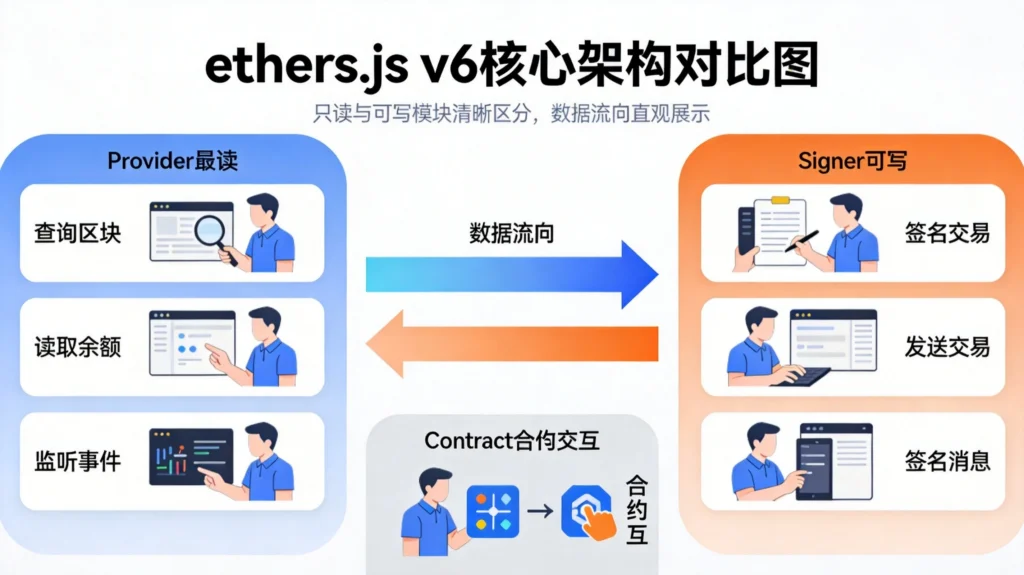
    v6 版本最重要的架构变化是明确分离了 Provider(只读)和 Signer(可写):

    • Provider:只读接口,用于查询区块链状态、读取合约数据
    • Signer:可写接口,用于签署交易、发送交易、签名消息

    javascript

    import { ethers } from "ethers";
    
    // Provider:只读,连接公共节点
    const provider = new ethers.JsonRpcProvider("https://eth.llamarpc.com");
    
    // Signer:可签名交易
    // 通过MetaMask等钱包连接时获得
    const signer = await provider.getSigner();
    
    // 或者通过私钥创建Signer
    const wallet = new ethers.Wallet("0x...", provider);
    const signerFromWallet = wallet.connect(provider);
    

    地址与合约的抽象

    v6 进一步抽象了地址概念,引入 AddressLikeContractLike 类型注解,可以接受地址字符串或 ENS 名称:

    javascript

    // 使用ENS名称
    const ensName = " vitalik.eth";
    
    // 直接使用地址
    const address = "0xd8dA6BF26964aF9D7eEd9e03E53415D37aA96045";
    
    // 两者都可以作为地址参数
    async function getBalance(address) {
      return await provider.getBalance(address);
    }
    
    await getBalance(ensName);    // works!
    await getBalance(address);   // works!
    

    Provider 实战

    连接不同网络

    javascript

    import { ethers } from "ethers";
    
    // Ethereum Mainnet
    const mainnetProvider = new ethers.JsonRpcProvider(
      "https://eth.llamarpc.com"
    );
    
    // Sepolia Testnet
    const sepoliaProvider = new ethers.JsonRpcProvider(
      "https://rpc.sepolia.org"
    );
    
    // Polygon
    const polygonProvider = new ethers.JsonRpcProvider(
      "https://polygon-rpc.com"
    );
    
    // Base
    const baseProvider = new ethers.JsonRpcProvider(
      "https://mainnet.base.org"
    );
    
    // 使用Infura
    const infuraProvider = new ethers.JsonRpcProvider(
      `https://mainnet.infura.io/v3/${process.env.INFURA_API_KEY}`
    );
    
    // 使用Alchemy
    const alchemyProvider = new ethers.JsonRpcProvider(
      `https://eth-mainnet.g.alchemy.com/v2/${process.env.ALCHEMY_API_KEY}`
    );
    

    基础查询 API

    javascript

    // 获取当前区块号
    const blockNumber = await provider.getBlockNumber();
    console.log(`Current block: ${blockNumber}`);
    
    // 获取余额
    const balance = await provider.getBalance("0x...");
    console.log(`Balance: ${ethers.formatEther(balance)} ETH`);
    
    // 获取Gas价格
    const feeData = await provider.getFeeData();
    console.log(`Gas Price: ${ethers.formatUnits(feeData.gasPrice, "gwei")} gwei`);
    console.log(`Max Fee: ${ethers.formatUnits(feeData.maxFeePerGas, "gwei")} gwei`);
    console.log(`Max Priority Fee: ${ethers.formatUnits(feeData.maxPriorityFeePerGas, "gwei")} gwei`);
    
    // 获取区块信息
    const block = await provider.getBlock(blockNumber);
    console.log(`Block timestamp: ${new Date(block.timestamp * 1000)}`);
    console.log(`Transactions: ${block.transactions.length}`);
    
    // 获取交易收据
    const receipt = await provider.getTransactionReceipt("0x...");
    console.log(`Status: ${receipt.status === 1 ? "Success" : "Failed"}`);
    console.log(`Gas Used: ${receipt.gasUsed}`);
    
    // 获取代码(验证合约是否存在)
    const code = await provider.getCode("0x...");
    console.log(`Has code: ${code !== "0x"}`);
    

    监听事件

    javascript

    // 监听新区块
    provider.on("block", (blockNumber) => {
      console.log(`New block: ${blockNumber}`);
    });
    
    // 监听待处理交易
    provider.on("pending", (txHash) => {
      console.log(`Pending tx: ${txHash}`);
    });
    
    // 监听特定地址的转账
    const filter = {
      address: "0x...",        // 代币合约地址
      topics: [
        ethers.id("Transfer(address,address,uint256)"),
        ethers.ZeroHash,         // from address (零地址表示铸币)
        ethers.getAddress("0x...".padEnd(66, "0"))  // to address
      ]
    };
    
    provider.on(filter, (log) => {
      console.log("Transfer detected:", log);
    });
    
    // 移除监听器
    function handleBlock(blockNumber) {
      console.log(`Block: ${blockNumber}`);
    }
    
    provider.on("block", handleBlock);
    provider.off("block", handleBlock);
    

    Signer 实战

    连接钱包

    javascript

    // 浏览器环境中从 window.ethereum 获取
    async function connectWallet() {
      if (typeof window.ethereum !== "undefined") {
        try {
          // 请求钱包连接
          const accounts = await window.ethereum.request({
            method: "eth_requestAccounts"
          });
          console.log("Connected:", accounts[0]);
          
          // 创建Signer
          const provider = new ethers.BrowserProvider(window.ethereum);
          const signer = await provider.getSigner();
          
          return { provider, signer, account: accounts[0] };
        } catch (error) {
          console.error("Connection failed:", error);
        }
      } else {
        console.log("Please install MetaMask!");
      }
    }
    
    // 监听账户变化
    window.ethereum.on("accountsChanged", (accounts) => {
      if (accounts.length === 0) {
        console.log("Please connect to MetaMask.");
      } else {
        console.log("Account changed to:", accounts[0]);
      }
    });
    
    // 监听网络变化
    window.ethereum.on("chainChanged", (chainId) => {
      console.log("Network changed, chainId:", parseInt(chainId, 16));
      window.location.reload();
    });
    

    发送交易

    javascript

    async function sendTransaction(signer) {
      const address = await signer.getAddress();
      
      // 获取当前Gas价格
      const feeData = await signer.provider.getFeeData();
      
      // 构建交易
      const tx = {
        to: "0x...",              // 收款地址
        value: ethers.parseEther("0.01"),  // 发送0.01 ETH
        maxFeePerGas: feeData.maxFeePerGas,
        maxPriorityFeePerGas: feeData.maxPriorityFeePerGas,
      };
      
      // 发送交易
      const txResponse = await signer.sendTransaction(tx);
      console.log(`Transaction sent: ${txResponse.hash}`);
      
      // 等待确认
      const receipt = await txResponse.wait();
      console.log(`Confirmed in block: ${receipt.blockNumber}`);
      
      return receipt;
    }
    
    // 签名并发送自定义交易(更灵活的控制)
    async function sendCustomTransaction(signer) {
      const tx = {
        type: 2,                              // EIP-1559 交易类型
        to: "0x...",
        value: 0,
        data: "0x...",                        // 合约调用数据
        maxFeePerGas: ethers.parseGwei("30"),
        maxPriorityFeePerGas: ethers.parseGwei("2"),
        chainId: 1
      };
      
      // 签名交易
      const signedTx = await signer.signTransaction(tx);
      console.log("Signed transaction:", signedTx);
      
      // 发送已签名的交易
      const txResponse = await signer.provider.broadcastTransaction(signedTx);
      
      return await txResponse.wait();
    }
    

    签名消息

    javascript

    async function signMessage(signer) {
      const message = "Hello, Web3!";
      
      // 普通消息签名(EIP-191)
      const signature = await signer.signMessage(message);
      console.log("Signature:", signature);
      
      // 验证签名
      const recoveredAddress = ethers.verifyMessage(message, signature);
      console.log("Recovered:", recoveredAddress);
      
      // 签名Typed Data(EIP-712,更安全)
      const domain = {
        name: "MyDApp",
        version: "1",
        chainId: 1,
        verifyingContract: "0x..."
      };
      
      const types = {
        Person: [
          { name: "name", type: "string" },
          { name: "wallet", type: "address" }
        ],
        Mail: [
          { name: "from", type: "Person" },
          { name: "to", type: "Person" },
          { name: "contents", type: "string" }
        ]
      };
      
      const value = {
        from: { name: "Alice", wallet: await signer.getAddress() },
        to: { name: "Bob", wallet: "0x..." },
        contents: "Hello!"
      };
      
      const typedSignature = await signer.signTypedData(domain, types, value);
      console.log("Typed signature:", typedSignature);
    }
    

    合约交互

    创建合约实例

    javascript

    import { ethers } from "ethers";
    
    // ERC20 代币合约 ABI(简化版)
    const ERC20_ABI = [
      "function name() view returns (string)",
      "function symbol() view returns (string)",
      "function decimals() view returns (uint8)",
      "function totalSupply() view returns (uint256)",
      "function balanceOf(address) view returns (uint256)",
      "function transfer(address, uint256) returns (bool)",
      "function allowance(address, address) view returns (uint256)",
      "function approve(address, uint256) returns (bool)",
      "event Transfer(address indexed from, address indexed to, uint256 value)"
    ];
    
    // 使用地址和ABI创建合约
    const USDC_ADDRESS = "0xA0b86991c6218b36c1d19D4a2e9Eb0cE3606eB48";
    const usdcContract = new ethers.Contract(USDC_ADDRESS, ERC20_ABI, provider);
    
    // 组合Provider和Signer
    const usdcWithSigner = usdcContract.connect(signer);
    
    // 读取合约数据(只读,用Provider)
    async function getTokenInfo() {
      const name = await usdcContract.name();
      const symbol = await usdcContract.symbol();
      const decimals = await usdcContract.decimals();
      const totalSupply = await usdcContract.totalSupply();
      
      console.log(`${name} (${symbol})`);
      console.log(`Total Supply: ${ethers.formatUnits(totalSupply, decimals)}`);
    }
    
    // 读取用户余额
    async function getBalance(userAddress) {
      const balance = await usdcContract.balanceOf(userAddress);
      const decimals = await usdcContract.decimals();
      return ethers.formatUnits(balance, decimals);
    }
    

    发送合约交易

    javascript

    // 发送代币转账交易
    async function transferTokens(signer, to, amount) {
      const usdc = new ethers.Contract(USDC_ADDRESS, ERC20_ABI, signer);
      
      // 单位转换:6位小数
      const amountInWei = ethers.parseUnits(amount, 6);
      
      // 估算Gas
      const gasEstimate = await usdc.transfer.estimateGas(to, amountInWei);
      console.log(`Estimated gas: ${gasEstimate}`);
      
      // 发送交易
      const tx = await usdc.transfer(to, amountInWei);
      console.log(`Transaction hash: ${tx.hash}`);
      
      // 等待确认
      const receipt = await tx.wait();
      console.log(`Confirmed in block ${receipt.blockNumber}`);
      console.log(`Gas used: ${receipt.gasUsed}`);
      
      return receipt;
    }
    
    // 批量调用(只读)
    async function batchRead() {
      const calls = [
        usdcContract.name(),
        usdcContract.symbol(),
        usdcContract.totalSupply()
      ];
      
      // 使用 Promise.all 并行执行
      const [name, symbol, totalSupply] = await Promise.all(calls);
      console.log(name, symbol, totalSupply);
    }
    

    处理合约事件

    javascript

    // 监听 Transfer 事件
    function listenToTransfers(contractAddress, userAddress) {
      const filter = {
        address: contractAddress,
        topics: [
          ethers.id("Transfer(address,address,uint256)"),
          null,  // 任何 from
          ethers.getAddress(userAddress)  // to = user
        ]
      };
      
      provider.on(filter, (log) => {
        const iface = new ethers.Interface(ERC20_ABI);
        const parsed = iface.parseLog({
          topics: log.topics,
          data: log.data
        });
        
        console.log(`Received ${parsed.args.value} tokens from ${parsed.args.from}`);
      });
      
      // 监听所有事件(带过滤)
      contract.on("Transfer", (from, to, value, event) => {
        console.log(`${from} -> ${to}: ${value}`);
      });
    }
    
    // 查询历史事件
    async function queryPastEvents() {
      const filter = {
        address: USDC_ADDRESS,
        topics: [
          ethers.id("Transfer(address,address,uint256)")
        ],
        fromBlock: 19000000,
        toBlock: "latest"
      };
      
      const events = await provider.getLogs(filter);
      console.log(`Found ${events.length} Transfer events`);
      
      const iface = new ethers.Interface(ERC20_ABI);
      const decoded = events.map(e => iface.parseLog(e));
      
      return decoded;
    }
    

    实用工具函数

    单位转换

    javascript

    import { ethers } from "ethers";
    
    // ETH 单位转换
    ethers.parseEther("1.0");           // string -> BigInt (wei)
    ethers.formatEther(1000000000000000000n);  // BigInt -> string (ETH)
    
    ethers.parseGwei("30");              // Gwei -> wei
    ethers.formatGwei(30000000000n);     // wei -> Gwei
    
    // 自定义小数位
    ethers.formatUnits(1000000n, 6);     // "1.0" (USDC等6位代币)
    
    // 连接字符串到字节
    ethers.toBeHex(255);                 // "0xff"
    ethers.toBeHex(255, 32);             // 指定32字节 padding
    
    // 地址工具
    ethers.isAddress("0x...");          // 验证地址格式
    ethers.getAddress("0x...");         // 返回checksum地址
    ethers.computeAddress("0x...");      // 从公钥计算地址
    ethers.recoverAddress("0x...", sig); // 从签名恢复地址
    

    签名验证

    javascript

    import { ethers } from "ethers";
    
    // 验证消息签名
    function verifyMessage(message, signature) {
      const address = ethers.verifyMessage(message, signature);
      return address;
    }
    
    // 验证 Typed Data 签名
    function verifyTypedData(domain, types, value, signature) {
      const address = ethers.verifyTypedData(domain, types, value, signature);
      return address;
    }
    
    // 检查签名是否来自特定地址
    function isValidSignature(expectedAddress, message, signature) {
      const recovered = ethers.verifyMessage(message, signature);
      return recovered.toLowerCase() === expectedAddress.toLowerCase();
    }
    

    编码与解码

    javascript

    import { ethers } from "ethers";
    
    // ABI 编码
    const iface = new ethers.Interface([
      "function transfer(address to, uint256 amount)"
    ]);
    
    // 编码函数调用
    const data = iface.encodeFunctionData("transfer", [
      "0x...",
      ethers.parseEther("1")
    ]);
    
    // 解码函数参数
    const decoded = iface.decodeFunctionData("transfer", data);
    
    // 编码事件日志
    const parsed = iface.parseLog({
      topics: [...],
      data: "..."
    });
    
    console.log(parsed.args.to);
    console.log(parsed.args.amount);
    
    // 直接使用 Contract 编码
    const contract = new ethers.Contract(address, [...], provider);
    const populatedTx = await contract.transfer.populateTransaction(
      "0x...",
      ethers.parseEther("1")
    );
    

    完整 DApp 示例

    简单的代币发送器

    javascript

    // index.html 中引入
    // <script type="module" src="app.js"></script>
    
    // app.js
    import { ethers } from "ethers";
    
    class TokenSender {
      constructor() {
        this.provider = null;
        this.signer = null;
        this.connected = false;
        
        // 配置
        this.tokenAddress = "0x...";  // 代币合约地址
        this.minBalance = ethers.parseEther("0.001");  // 最低余额要求
      }
      
      async init() {
        // 连接钱包
        if (typeof window.ethereum !== "undefined") {
          this.provider = new ethers.BrowserProvider(window.ethereum);
          
          // 尝试自动连接
          const accounts = await window.ethereum.request({
            method: "eth_accounts"
          });
          
          if (accounts.length > 0) {
            await this.connect();
          }
        }
      }
      
      async connect() {
        try {
          await this.provider.send("eth_requestAccounts", []);
          this.signer = await this.provider.getSigner();
          this.connected = true;
          
          this.updateUI();
          this.startEventListeners();
        } catch (error) {
          console.error("Connection failed:", error);
        }
      }
      
      async sendTokens(recipient, amount) {
        if (!this.connected) {
          throw new Error("Wallet not connected");
        }
        
        const token = new ethers.Contract(
          this.tokenAddress,
          [
            "function transfer(address to, uint256 amount) returns (bool)",
            "function decimals() view returns (uint8)"
          ],
          this.signer
        );
        
        // 获取代币精度
        const decimals = await token.decimals();
        const amountWei = ethers.parseUnits(amount, decimals);
        
        // 估算Gas
        const gasEstimate = await token.transfer.estimateGas(recipient, amountWei);
        
        // 获取Fee Data
        const feeData = await this.provider.getFeeData();
        
        // 发送交易
        const tx = await token.transfer(recipient, amountWei, {
          gasLimit: gasEstimate * 120n / 100n,  // 增加20% buffer
          maxFeePerGas: feeData.maxFeePerGas,
          maxPriorityFeePerGas: feeData.maxPriorityFeePerGas
        });
        
        console.log(`Transaction sent: ${tx.hash}`);
        
        // 等待确认
        const receipt = await tx.wait();
        
        console.log(`Confirmed! Gas used: ${receipt.gasUsed}`);
        return receipt;
      }
      
      async getBalance() {
        if (!this.connected) return null;
        
        const address = await this.signer.getAddress();
        const balance = await this.provider.getBalance(address);
        return ethers.formatEther(balance);
      }
      
      startEventListeners() {
        // 账户变化
        window.ethereum.on("accountsChanged", async (accounts) => {
          if (accounts.length === 0) {
            this.connected = false;
          } else {
            this.signer = await this.provider.getSigner();
          }
          this.updateUI();
        });
        
        // 网络变化
        window.ethereum.on("chainChanged", () => {
          window.location.reload();
        });
        
        // 区块更新
        this.provider.on("block", (blockNumber) => {
          document.getElementById("blockNumber").textContent = blockNumber;
        });
      }
      
      updateUI() {
        const status = document.getElementById("status");
        const connectBtn = document.getElementById("connectBtn");
        
        if (this.connected) {
          status.textContent = "Connected";
          connectBtn.textContent = "Connected";
          connectBtn.disabled = true;
        } else {
          status.textContent = "Not Connected";
          connectBtn.textContent = "Connect Wallet";
          connectBtn.disabled = false;
        }
      }
    }
    
    // 初始化
    const app = new TokenSender();
    app.init();
    
    // 导出供 HTML 调用
    window.app = app;
    

    常见问题与最佳实践

    1. Provider 选择

    javascript

    // 不要在每次请求时创建新 Provider
    // ❌ 错误
    async function getBalance() {
      const provider = new ethers.JsonRpcProvider("https://...");
      return await provider.getBalance(address);
    }
    
    // ✅ 正确:复用 Provider 实例
    const provider = new ethers.JsonRpcProvider("https://...");
    async function getBalance() {
      return await provider.getBalance(address);
    }
    

    2. BigInt 处理

    v6 使用原生 BigInt,需要注意精度:

    javascript

    // ❌ 可能丢失精度
    const amount = balance * 0.1;
    
    // ✅ 使用 BigInt 运算
    const amount = balance * 10n / 100n;
    
    // ✅ 使用 ethers 辅助函数
    const amount = ethers.parseEther("0.1");
    

    3. 错误处理

    javascript

    async function safeCall() {
      try {
        const result = await contract.someFunction();
        return result;
      } catch (error) {
        if (error.code === "CALL_EXCEPTION") {
          console.log("Transaction would fail");
          console.log("Args:", error.args);
        } else if (error.code === "INSUFFICIENT_FUNDS") {
          console.log("Not enough balance");
        } else {
          console.error("Unknown error:", error);
        }
        throw error;
      }
    }
    

    4. Gas 估算

    javascript

    // 动态 Gas 策略
    async function sendWithOptimalGas(tx) {
      const feeData = await provider.getFeeData();
      
      // 根据网络状况调整
      const baseFee = feeData.maxFeePerGas;
      const priorityFee = feeData.maxPriorityFeePerGas;
      
      // 增加优先级费以加快确认
      const expeditedPriorityFee = priorityFee * 2n;
      
      return {
        ...tx,
        maxFeePerGas: baseFee + expeditedPriorityFee,
        maxPriorityFeePerGas: expeditedPriorityFee,
        gasLimit: tx.gasLimit * 110n / 100n  // 10% buffer
      };
    }
    

    总结

    ethers.js v6 为现代 Web3 开发提供了强大而优雅的工具集。掌握以下核心要点:

    1. Provider/Signer 分离:Provider 用于只读查询,Signer 用于交易签名
    2. 合约抽象:通过 Contract 类简化合约交互
    3. 事件监听:使用 on/off 方法监听链上事件
    4. 单位转换:熟练使用 parseEther/formatUnits 等辅助函数
    5. 错误处理:理解常见的错误类型和代码

    V6 版本相比 V5 在性能、包体积和 API 一致性上都有显著提升,建议新项目直接使用 V6。

    相关阅读

  • 智能合约多签钱包开发实战:从零构建安全的多签机制

    智能合约多签钱包开发实战:从零构建安全的多签机制

    在加密货币世界里,资产安全始终是首要命题。对于个人投资者而言,助记词丢失是最大的风险来源;对于项目方、DAO金库或机构投资者而言,单点故障更是不可接受的安全隐患。多签钱包(Multi-Signature Wallet)正是为解决这些问题而生的核心基础设施。

    Gnosis Safe作为以太坊生态中最成功的多签钱包协议,管理着价值数百亿美元的资产。其设计理念和技术实现值得所有区块链开发者深入学习。本文将从零开始,完整实现一个功能完备的多签钱包合约。

    多签交易工作流程图,展示提交、确认、执行三阶段的完整生命周期

    多签钱包的核心设计原则

    为什么需要多签?

    传统单签钱包存在两个核心风险:

    1. 单点故障:私钥丢失或泄露意味着资产永久损失
    2. 权力集中:单一私钥持有者拥有完全控制权,无法实现权限分离

    多签钱包通过”M-of-N”机制解决这些问题:N个私钥持有者中,至少需要M个确认才能执行交易。这意味着:

    • 即使1个私钥丢失,只要M≤N-1,资产仍然安全
    • 大额交易需要多人审批,避免内部欺诈
    • 策略性地分配签名权,实现权限层级管理

    Gnosis Safe的设计哲学

    Gnosis Safe的多签设计有几个关键原则:

    • 模块化:Safe本身是轻量核心,通过模块扩展功能
    • 交易队列:所有交易必须经过确认队列,避免丢失或遗漏
    • 执行延迟:可配置的延迟机制,给撤销操作留出窗口
    • 邀请制:新签名者需要现有签名者集体确认

    基础架构实现

    合约结构概览

    我们的多签钱包包含以下核心组件:

    plaintext

    MultiSigWallet
    ├── 状态变量:所有者列表、阈值、交易计数
    ├── 交易存储:pendingTransactions, executedTransactions
    ├── 核心函数:submitTransaction, confirmTransaction, executeTransaction
    └── 事件:提交、确认、执行、撤销、所有者变更
    

    基础版本实现

    solidity

    // SPDX-License-Identifier: MIT
    pragma solidity ^0.8.24;
    
    /**
     * @title MultiSigWallet
     * @notice 基础版多签钱包合约
     * @dev 实现 M-of-N 多签机制
     */
    contract MultiSigWallet {
        // ============ 状态变量 ============
        
        // 所有者地址列表
        address[] public owners;
        
        // 地址是否为所有者
        mapping(address => bool) public isOwner;
        
        // M-of-N: 需要多少个确认才能执行
        uint256 public required;
        
        // 交易计数
        uint256 public transactionCount;
        
        // 交易结构
        struct Transaction {
            address to;           // 目标地址
            uint256 value;        // 转账金额(wei)
            bytes data;           // 调用数据
            bool executed;        // 是否已执行
            uint256 numConfirmations;  // 当前确认数
        }
        
        // 交易列表
        mapping(uint256 => Transaction) public transactions;
        
        // 交易确认记录:txId -> owner -> bool
        mapping(uint256 => mapping(address => bool)) public confirmations;
        
        // ============ 事件 ============
        
        event SubmitTransaction(
            address indexed owner,
            uint256 indexed txIndex,
            address indexed to,
            uint256 value,
            bytes data
        );
        
        event ConfirmTransaction(address indexed owner, uint256 indexed txIndex);
        
        event RevokeConfirmation(address indexed owner, uint256 indexed txIndex);
        
        event ExecuteTransaction(address indexed owner, uint256 indexed txIndex);
        
        event OwnerAdded(address indexed newOwner);
        
        event OwnerRemoved(address indexed removedOwner);
        
        event RequirementChanged(uint256 newRequirement);
        
        // ============ 修饰符 ============
        
        modifier onlyOwner() {
            require(isOwner[msg.sender], "Not an owner");
            _;
        }
        
        modifier txExists(uint256 _txIndex) {
            require(_txIndex < transactionCount, "Transaction does not exist");
            _;
        }
        
        modifier notExecuted(uint256 _txIndex) {
            require(!transactions[_txIndex].executed, "Already executed");
            _;
        }
        
        modifier notConfirmed(uint256 _txIndex) {
            require(!confirmations[_txIndex][msg.sender], "Already confirmed");
            _;
        }
        
        // ============ 构造函数 ============
        
        constructor(address[] memory _owners, uint256 _required) {
            require(_owners.length > 0, "Owners required");
            require(
                _required > 0 && _required <= _owners.length,
                "Invalid required number"
            );
            
            for (uint256 i = 0; i < _owners.length; i++) {
                address owner = _owners[i];
                require(owner != address(0), "Invalid owner");
                require(!isOwner[owner], "Owner not unique");
                
                isOwner[owner] = true;
                owners.push(owner);
            }
            
            required = _required;
        }
        
        // ============ 核心函数 ============
        
        /**
         * @notice 提交新交易
         */
        function submitTransaction(address _to, uint256 _value, bytes memory _data)
            public
            onlyOwner
            returns (uint256 txIndex)
        {
            txIndex = transactionCount;
            
            transactions[txIndex] = Transaction({
                to: _to,
                value: _value,
                data: _data,
                executed: false,
                numConfirmations: 0
            });
            
            transactionCount++;
            
            emit SubmitTransaction(msg.sender, txIndex, _to, _value, _data);
            
            // 自动确认自己的交易
            confirmTransaction(txIndex);
        }
        
        /**
         * @notice 确认交易
         */
        function confirmTransaction(uint256 _txIndex)
            public
            onlyOwner
            txExists(_txIndex)
            notExecuted(_txIndex)
            notConfirmed(_txIndex)
        {
            confirmations[_txIndex][msg.sender] = true;
            transactions[_txIndex].numConfirmations++;
            
            emit ConfirmTransaction(msg.sender, _txIndex);
            
            // 检查是否达到执行阈值
            if (transactions[_txIndex].numConfirmations >= required) {
                executeTransaction(_txIndex);
            }
        }
        
        /**
         * @notice 执行交易
         */
        function executeTransaction(uint256 _txIndex)
            public
            onlyOwner
            txExists(_txIndex)
            notExecuted(_txIndex)
        {
            Transaction storage transaction = transactions[_txIndex];
            
            require(
                transaction.numConfirmations >= required,
                "Not enough confirmations"
            );
            
            transaction.executed = true;
            
            (bool success, ) = transaction.to.call{value: transaction.value}(
                transaction.data
            );
            
            require(success, "Transaction execution failed");
            
            emit ExecuteTransaction(msg.sender, _txIndex);
        }
        
        /**
         * @notice 撤销确认
         */
        function revokeConfirmation(uint256 _txIndex)
            public
            onlyOwner
            txExists(_txIndex)
            notExecuted(_txIndex)
        {
            require(confirmations[_txIndex][msg.sender], "Not confirmed");
            
            confirmations[_txIndex][msg.sender] = false;
            transactions[_txIndex].numConfirmations--;
            
            emit RevokeConfirmation(msg.sender, _txIndex);
        }
        
        // ============ 所有者管理 ============
        
        /**
         * @notice 添加所有者
         */
        function addOwner(address _newOwner) public onlyOwner {
            require(_newOwner != address(0), "Invalid address");
            require(!isOwner[_newOwner], "Already an owner");
            
            isOwner[_newOwner] = true;
            owners.push(_newOwner);
            
            // 如果新的所有者数量超过阈值,自动调整阈值
            if (required < owners.length) {
                required++;
            }
            
            emit OwnerAdded(_newOwner);
        }
        
        /**
         * @notice 移除所有者
         */
        function removeOwner(address _owner) public onlyOwner {
            require(owners.length > 1, "Cannot remove last owner");
            require(isOwner[_owner], "Not an owner");
            require(required <= owners.length - 1, "Invalid required value");
            
            isOwner[_owner] = false;
            
            // 从数组中移除
            address[] memory newOwners = new address[](owners.length - 1);
            uint256 index = 0;
            for (uint256 i = 0; i < owners.length; i++) {
                if (owners[i] != _owner) {
                    newOwners[index] = owners[i];
                    index++;
                }
            }
            owners = newOwners;
            
            emit OwnerRemoved(_owner);
        }
        
        /**
         * @notice 修改阈值
         */
        function changeRequirement(uint256 _newRequired) public onlyOwner {
            require(
                _newRequired > 0 && _newRequired <= owners.length,
                "Invalid required value"
            );
            
            required = _newRequired;
            emit RequirementChanged(_newRequired);
        }
        
        // ============ 查询函数 ============
        
        function getOwners() public view returns (address[] memory) {
            return owners;
        }
        
        function getTransactionCount() public view returns (uint256) {
            return transactionCount;
        }
        
        function getConfirmations(uint256 _txIndex)
            public
            view
            returns (address[] memory)
        {
            address[] memory confirmers = new address[](
                transactions[_txIndex].numConfirmations
            );
            
            uint256 index = 0;
            for (uint256 i = 0; i < owners.length; i++) {
                if (confirmations[_txIndex][owners[i]]) {
                    confirmers[index] = owners[i];
                    index++;
                }
            }
            
            return confirmers;
        }
        
        function getPendingTransactions()
            public
            view
            returns (Transaction[] memory)
        {
            uint256 count = 0;
            for (uint256 i = 0; i < transactionCount; i++) {
                if (!transactions[i].executed) {
                    count++;
                }
            }
            
            Transaction[] memory pending = new Transaction[](count);
            uint256 index = 0;
            for (uint256 i = 0; i < transactionCount; i++) {
                if (!transactions[i].executed) {
                    pending[index] = transactions[i];
                    index++;
                }
            }
            
            return pending;
        }
        
        // ============ 接收ETH ============
        
        receive() external payable {}
    }
    

    增强版本:带时间锁的多签钱包

    时间锁机制

    基础多签钱包的一个缺陷是:一旦交易达到M个确认,可以立即执行。这意味着恶意签名者可以在”观察者”发现异常前完成攻击。

    时间锁机制通过引入延迟期来解决这个问题——交易提交后必须等待一定时间才能执行,给了各方撤销和干预的机会。

    solidity

    // SPDX-License-Identifier: MIT
    pragma solidity ^0.8.24;
    
    /**
     * @title TimelockedMultiSig
     * @notice 带时间锁的多签钱包
     */
    contract TimelockedMultiSig {
        // ============ 时间锁配置 ============
        
        // 时间锁延迟(秒)
        uint256 public timelockDelay;
        
        // 每个操作类型可配置的延迟
        mapping(bytes32 => uint256) public operationDelays;
        
        // 交易状态
        enum TransactionState {
            None,
            Submitted,
            Confirmed,
            AwaitingExecution,
            Executed,
            Cancelled
        }
        
        struct TimelockedTransaction {
            address to;
            uint256 value;
            bytes data;
            bytes32 operationId;
            TransactionState state;
            uint256 submissionTime;
            uint256 requiredAfterTime;
            uint256 numConfirmations;
            address submitter;
            address[] confirmers;
        }
        
        // ============ 交易存储 ============
        
        uint256 public transactionCount;
        mapping(uint256 => TimelockedTransaction) public transactions;
        mapping(uint256 => mapping(address => bool)) public confirmations;
        mapping(uint256 => mapping(address => bool)) public rejections;
        
        // ============ 事件 ============
        
        event TransactionSubmitted(
            uint256 indexed txId,
            address indexed submitter,
            address to,
            uint256 value,
            bytes32 operationId
        );
        
        event TransactionConfirmed(
            uint256 indexed txId,
            address indexed confirmer
        );
        
        event TransactionRejected(
            uint256 indexed txId,
            address indexed rejecter
        );
        
        event TransactionReadyForExecution(
            uint256 indexed txId,
            uint256 executableAfterTime
        );
        
        event TransactionExecuted(uint256 indexed txId);
        
        event TransactionCancelled(uint256 indexed txId);
        
        event TimelockDelayChanged(uint256 oldDelay, uint256 newDelay);
        
        // ============ 修饰符 ============
        
        modifier onlyOwner() {
            require(isOwner[msg.sender], "Not owner");
            _;
        }
        
        modifier txExists(uint256 txId) {
            require(txId < transactionCount, "Tx not found");
            _;
        }
        
        modifier onlyPending(uint256 txId) {
            require(
                transactions[txId].state == TransactionState.Submitted ||
                transactions[txId].state == TransactionState.Confirmed,
                "Tx not pending"
            );
            _;
        }
        
        // 所有者相关
        address[] public owners;
        mapping(address => bool) public isOwner;
        uint256 public required;
        
        // ============ 构造函数 ============
        
        constructor(
            address[] memory _owners,
            uint256 _required,
            uint256 _timelockDelay
        ) {
            require(_owners.length > 0, "No owners");
            require(
                _required > 0 && _required <= _owners.length,
                "Invalid required"
            );
            
            for (uint256 i = 0; i < _owners.length; i++) {
                require(!isOwner[_owners[i]], "Duplicate owner");
                isOwner[_owners[i]] = true;
                owners.push(_owners[i]);
            }
            
            required = _required;
            timelockDelay = _timelockDelay;
            
            // 设置默认操作延迟
            operationDelays[bytes32(0)] = _timelockDelay; // 默认
        }
        
        // ============ 交易生命周期 ============
        
        /**
         * @notice 提交交易
         */
        function submitTransaction(
            address _to,
            uint256 _value,
            bytes calldata _data,
            bytes32 _operationId
        ) external onlyOwner returns (uint256 txId) {
            txId = transactionCount++;
            
            uint256 delay = operationDelays[_operationId];
            if (delay == 0) {
                delay = timelockDelay;
            }
            
            transactions[txId] = TimelockedTransaction({
                to: _to,
                value: _value,
                data: _data,
                operationId: _operationId,
                state: TransactionState.Submitted,
                submissionTime: block.timestamp,
                requiredAfterTime: block.timestamp + delay,
                numConfirmations: 1,
                submitter: msg.sender,
                confirmers: new address[](0)
            });
            
            confirmations[txId][msg.sender] = true;
            
            emit TransactionSubmitted(txId, msg.sender, _to, _value, _operationId);
        }
        
        /**
         * @notice 确认交易
         */
        function confirmTransaction(uint256 txId)
            external
            onlyOwner
            txExists(txId)
            onlyPending(txId)
        {
            require(!confirmations[txId][msg.sender], "Already confirmed");
            require(!rejections[txId][msg.sender], "Already rejected");
            
            confirmations[txId][msg.sender] = true;
            transactions[txId].confirmers.push(msg.sender);
            transactions[txId].numConfirmations++;
            
            emit TransactionConfirmed(txId, msg.sender);
            
            // 检查是否达到确认阈值
            if (transactions[txId].numConfirmations >= required) {
                _transitionToAwaitingExecution(txId);
            }
        }
        
        /**
         * @notice 否决交易
         */
        function rejectTransaction(uint256 txId)
            external
            onlyOwner
            txExists(txId)
            onlyPending(txId)
        {
            require(!rejections[txId][msg.sender], "Already rejected");
            
            rejections[txId][msg.sender] = true;
            
            // 如果有足够多的否决,可以直接取消
            uint256 rejectionCount = 0;
            for (uint256 i = 0; i < owners.length; i++) {
                if (rejections[txId][owners[i]]) {
                    rejectionCount++;
                }
            }
            
            if (rejectionCount >= owners.length - required + 1) {
                transactions[txId].state = TransactionState.Cancelled;
                emit TransactionCancelled(txId);
            }
            
            emit TransactionRejected(txId, msg.sender);
        }
        
        /**
         * @notice 过渡到可执行状态
         */
        function _transitionToAwaitingExecution(uint256 txId) internal {
            transactions[txId].state = TransactionState.AwaitingExecution;
            
            emit TransactionReadyForExecution(
                txId,
                transactions[txId].requiredAfterTime
            );
        }
        
        /**
         * @notice 执行交易(需等待时间锁)
         */
        function executeTransaction(uint256 txId)
            external
            onlyOwner
            txExists(txId)
        {
            TimelockedTransaction storage tx = transactions[txId];
            
            require(
                tx.state == TransactionState.AwaitingExecution,
                "Not ready for execution"
            );
            require(
                block.timestamp >= tx.requiredAfterTime,
                "Time lock not expired"
            );
            
            tx.state = TransactionState.Executed;
            
            (bool success, ) = tx.to.call{value: tx.value}(tx.data);
            require(success, "Execution failed");
            
            emit TransactionExecuted(txId);
        }
        
        /**
         * @notice 取消交易
         */
        function cancelTransaction(uint256 txId)
            external
            onlyOwner
            txExists(txId)
        {
            TimelockedTransaction storage tx = transactions[txId];
            
            require(
                tx.state == TransactionState.Submitted ||
                tx.state == TransactionState.Confirmed ||
                tx.state == TransactionState.AwaitingExecution,
                "Cannot cancel"
            );
            
            tx.state = TransactionState.Cancelled;
            emit TransactionCancelled(txId);
        }
        
        // ============ 管理函数 ============
        
        /**
         * @notice 设置时间锁延迟
         */
        function setTimelockDelay(uint256 _newDelay) external onlyOwner {
            require(_newDelay >= 1 days, "Delay too short");
            
            uint256 oldDelay = timelockDelay;
            timelockDelay = _newDelay;
            
            emit TimelockDelayChanged(oldDelay, _newDelay);
        }
        
        /**
         * @notice 设置特定操作的延迟
         */
        function setOperationDelay(bytes32 operationId, uint256 delay) 
            external 
            onlyOwner 
        {
            operationDelays[operationId] = delay;
        }
        
        /**
         * @notice 紧急执行(绕过时间锁,仅紧急情况使用)
         */
        function emergencyExecute(
            address _to,
            uint256 _value,
            bytes calldata _data
        ) external onlyOwner {
            require(owners.length >= 3, "Need at least 3 owners for emergency");
            
            // 紧急执行需要所有所有者的确认
            uint256 emergencyConfirmations = 0;
            for (uint256 i = 0; i < owners.length; i++) {
                if (isOwner[owners[i]]) {
                    emergencyConfirmations++;
                }
            }
            
            require(emergencyConfirmations == owners.length, "Need all confirmations");
            
            (bool success, ) = _to.call{value: _value}(_data);
            require(success, "Emergency execution failed");
        }
        
        // ============ 查询函数 ============
        
        function getOwners() external view returns (address[] memory) {
            return owners;
        }
        
        function getTransaction(uint256 txId) 
            external 
            view 
            returns (TimelockedTransaction memory) 
        {
            return transactions[txId];
        }
        
        function getPendingTransactions() external view returns (uint256[] memory) {
            uint256 count = 0;
            for (uint256 i = 0; i < transactionCount; i++) {
                if (transactions[i].state != TransactionState.Executed &&
                    transactions[i].state != TransactionState.Cancelled) {
                    count++;
                }
            }
            
            uint256[] memory pending = new uint256[](count);
            uint256 index = 0;
            for (uint256 i = 0; i < transactionCount; i++) {
                if (transactions[i].state != TransactionState.Executed &&
                    transactions[i].state != TransactionState.Cancelled) {
                    pending[index] = i;
                    index++;
                }
            }
            
            return pending;
        }
        
        // ============ 接收ETH ============
        
        receive() external payable {}
    }
    

    模块化扩展:DAO治理集成

    模块化设计的重要性

    Gnosis Safe的核心设计哲学是模块化。Safe本身只处理多签逻辑,所有额外功能(如角色管理、ERC20代币支持、DAO集成)都通过模块实现。

    让我们实现一个DAO治理模块,允许代币持有者参与多签决策:

    solidity

    // SPDX-License-Identifier: MIT
    pragma solidity ^0.8.24;
    
    /**
     * @title GovernanceModule
     * @notice DAO治理模块:允许代币持有者投票决定多签操作
     */
    contract GovernanceModule {
        // ============ 状态 ============
        
        // 主钱包合约引用
        address public multiSigWallet;
        
        // 治理代币
        address public governanceToken;
        
        // 提案结构
        struct Proposal {
            address proposer;
            address to;
            uint256 value;
            bytes data;
            string description;
            uint256 startTime;
            uint256 duration;
            uint256 forVotes;
            uint256 againstVotes;
            bool executed;
            bool cancelled;
            mapping(address => bool) hasVoted;
            mapping(address => uint256) voteWeight;
        }
        
        // 提案列表
        mapping(uint256 => Proposal) public proposals;
        uint256 public proposalCount;
        
        // 提案状态
        enum ProposalState {
            Pending,
            Active,
            Succeeded,
            Defeated,
            Executed,
            Cancelled
        }
        
        // 投票门槛
        uint256 public votingThreshold;
        uint256 public votingDuration;
        
        // ============ 事件 ============
        
        event ProposalCreated(
            uint256 indexed proposalId,
            address indexed proposer,
            address to,
            uint256 value,
            string description
        );
        
        event VoteCast(
            uint256 indexed proposalId,
            address indexed voter,
            bool support,
            uint256 weight
        );
        
        event ProposalExecuted(uint256 indexed proposalId);
        
        event ProposalCancelled(uint256 indexed proposalId);
        
        // ============ 修饰符 ============
        
        modifier onlyGovernance() {
            require(msg.sender == multiSigWallet, "Only wallet");
            _;
        }
        
        // ============ 构造函数 ============
        
        constructor(
            address _multiSigWallet,
            address _governanceToken,
            uint256 _votingThreshold,
            uint256 _votingDuration
        ) {
            multiSigWallet = _multiSigWallet;
            governanceToken = _governanceToken;
            votingThreshold = _votingThreshold;
            votingDuration = _votingDuration;
        }
        
        // ============ 核心函数 ============
        
        /**
         * @notice 创建治理提案
         */
        function createProposal(
            address _to,
            uint256 _value,
            bytes calldata _data,
            string calldata _description
        ) external returns (uint256 proposalId) {
            require(bytes(_description).length > 0, "Empty description");
            
            proposalId = proposalCount++;
            Proposal storage proposal = proposals[proposalId];
            
            proposal.proposer = msg.sender;
            proposal.to = _to;
            proposal.value = _value;
            proposal.data = _data;
            proposal.description = _description;
            proposal.startTime = block.timestamp;
            proposal.duration = votingDuration;
            
            emit ProposalCreated(proposalId, msg.sender, _to, _value, _description);
        }
        
        /**
         * @notice 投票
         */
        function castVote(uint256 proposalId, bool support) external {
            Proposal storage proposal = proposals[proposalId];
            
            require(
                block.timestamp >= proposal.startTime &&
                block.timestamp < proposal.startTime + proposal.duration,
                "Voting not active"
            );
            require(!proposal.hasVoted[msg.sender], "Already voted");
            
            // 获取投票权重(持有代币数量)
            uint256 weight = IERC20(governanceToken).balanceOf(msg.sender);
            require(weight >= votingThreshold, "Below voting threshold");
            
            proposal.hasVoted[msg.sender] = true;
            proposal.voteWeight[msg.sender] = weight;
            
            if (support) {
                proposal.forVotes += weight;
            } else {
                proposal.againstVotes += weight;
            }
            
            emit VoteCast(proposalId, msg.sender, support, weight);
        }
        
        /**
         * @notice 查询提案状态
         */
        function getProposalState(uint256 proposalId) 
            public 
            view 
            returns (ProposalState) 
        {
            Proposal storage proposal = proposals[proposalId];
            
            if (proposal.executed) {
                return ProposalState.Executed;
            }
            if (proposal.cancelled) {
                return ProposalState.Cancelled;
            }
            if (block.timestamp < proposal.startTime) {
                return ProposalState.Pending;
            }
            if (block.timestamp < proposal.startTime + proposal.duration) {
                return ProposalState.Active;
            }
            if (proposal.forVotes > proposal.againstVotes) {
                return ProposalState.Succeeded;
            }
            return ProposalState.Defeated;
        }
        
        /**
         * @notice 执行通过的提案
         */
        function executeProposal(uint256 proposalId) external onlyGovernance {
            require(
                getProposalState(proposalId) == ProposalState.Succeeded,
                "Proposal not succeeded"
            );
            
            Proposal storage proposal = proposals[proposalId];
            proposal.executed = true;
            
            (bool success, ) = proposal.to.call{value: proposal.value}(proposal.data);
            require(success, "Execution failed");
            
            emit ProposalExecuted(proposalId);
        }
        
        /**
         * @notice 取消提案
         */
        function cancelProposal(uint256 proposalId) external {
            Proposal storage proposal = proposals[proposalId];
            require(msg.sender == proposal.proposer, "Not proposer");
            require(!proposal.executed, "Already executed");
            
            proposal.cancelled = true;
            emit ProposalCancelled(proposalId);
        }
    }
    
    // IERC20接口
    interface IERC20 {
        function balanceOf(address account) external view returns (uint256);
    }
    

    安全最佳实践

    重入攻击防护

    多签钱包经常处理ETH和代币转账,必须防范重入攻击:

    solidity

    // 安全转账模式
    function safeTransfer(address token, address to, uint256 amount) internal {
        (bool success, bytes memory data) = token.call(
            abi.encodeWithSelector(
                IERC20.transfer.selector,
                to,
                amount
            )
        );
        require(success && (data.length == 0 || abi.decode(data, (bool))),
            "Transfer failed");
    }
    
    // 遵循Checks-Effects-Interactions模式
    function executeTransactionSafe(uint256 txId) internal {
        Transaction storage tx = transactions[txId];
        
        // Checks
        require(tx.numConfirmations >= required, "Not enough confirmations");
        require(!tx.executed, "Already executed");
        
        // Effects
        tx.executed = true;
        
        // Interactions(最后执行外部调用)
        (bool success, ) = tx.to.call{value: tx.value}(tx.data);
        require(success, "Execution failed");
    }
    

    交易队列管理

    对于高频多签操作,建议实现交易队列:

    solidity

    // 交易队列:避免交易丢失或冲突
    contract TransactionQueue {
        struct QueuedTransaction {
            address to;
            uint256 value;
            bytes data;
            uint256 nonce;  // 唯一标识,防止重放
            uint256 expiresAt;
            bytes32 txHash;
        }
        
        mapping(bytes32 => QueuedTransaction) public queue;
        mapping(address => uint256) public nonces;
        
        function queueTransaction(
            address _to,
            uint256 _value,
            bytes calldata _data,
            uint256 _expiration
        ) internal returns (bytes32 txHash) {
            uint256 nonce = nonces[msg.sender]++;
            
            txHash = keccak256(abi.encodePacked(
                msg.sender,
                nonce,
                _to,
                _value,
                _data
            ));
            
            queue[txHash] = QueuedTransaction({
                to: _to,
                value: _value,
                data: _data,
                nonce: nonce,
                expiresAt: block.timestamp + _expiration,
                txHash: txHash
            });
        }
        
        function executeFromQueue(bytes32 txHash) internal {
            QueuedTransaction storage qt = queue[txHash];
            require(qt.expiresAt > block.timestamp, "Transaction expired");
            
            delete queue[txHash];
            
            (bool success, ) = qt.to.call{value: qt.value}(qt.data);
            require(success, "Execution failed");
        }
    }
    

    测试与验证

    Hardhat测试套件

    javascript

    const { expect } = require("chai");
    const { ethers } = require("hardhat");
    const { time } = require("@nomicfoundation/hardhat-network-helpers");
    
    describe("MultiSigWallet", function () {
      let wallet;
      let owners;
      let required = 2;
      
      beforeEach(async () => {
        [owner1, owner2, owner3, recipient] = await ethers.getSigners();
        owners = [owner1.address, owner2.address, owner3.address];
        
        const MultiSig = await ethers.getContractFactory("MultiSigWallet");
        wallet = await MultiSig.deploy(owners, required);
        await wallet.deployed();
        
        // 预存一些ETH用于测试
        await owner1.sendTransaction({
          to: wallet.address,
          value: ethers.utils.parseEther("10")
        });
      });
      
      it("Should accept deposits", async () => {
        const balance = await ethers.provider.getBalance(wallet.address);
        expect(balance).to.equal(ethers.utils.parseEther("10"));
      });
      
      it("Should submit and auto-confirm transaction", async () => {
        const txIndex = 0;
        
        await wallet.connect(owner1).submitTransaction(
          recipient.address,
          ethers.utils.parseEther("1"),
          "0x"
        );
        
        const tx = await wallet.transactions(txIndex);
        expect(tx.to).to.equal(recipient.address);
        expect(tx.numConfirmations).to.equal(1);
      });
      
      it("Should execute transaction when threshold met", async () => {
        await wallet.connect(owner1).submitTransaction(
          recipient.address,
          ethers.utils.parseEther("1"),
          "0x"
        );
        
        await wallet.connect(owner2).confirmTransaction(0);
        
        const recipientBalance = await ethers.provider.getBalance(recipient.address);
        expect(recipientBalance).to.equal(ethers.utils.parseEther("1"));
      });
      
      it("Should prevent non-owner from confirming", async () => {
        await wallet.connect(owner1).submitTransaction(
          recipient.address,
          ethers.utils.parseEther("1"),
          "0x"
        );
        
        await expect(
          wallet.connect(recipient).confirmTransaction(0)
        ).to.be.revertedWith("Not an owner");
      });
      
      it("Should allow owner removal", async () => {
        await wallet.connect(owner1).removeOwner(owner3.address);
        
        const isOwner3 = await wallet.isOwner(owner3.address);
        expect(isOwner3).to.equal(false);
      });
    });
    

    总结

    多签钱包是区块链开发者的必修课题。本文从基础实现出发,逐步扩展到时间锁机制和DAO治理模块,展示了多签合约的核心设计模式。

    关键要点回顾:

    1. M-of-N机制:至少M个签名者确认才能执行,是多签的核心逻辑
    2. 事件驱动:所有状态变更必须发出事件,便于前端追踪和链下索引
    3. 修饰符复用:通过修饰符组合实现权限控制和状态验证
    4. 时间锁:为高风险操作引入延迟,提供安全保障和干预窗口
    5. 模块化:将功能分离到独立模块,便于扩展和维护

    在实际生产环境中,建议直接使用经过审计的Gnosis Safe合约代码,而不是从零实现。但理解其内部原理对于安全审计和定制开发至关重要。

    相关阅读